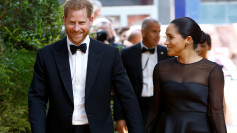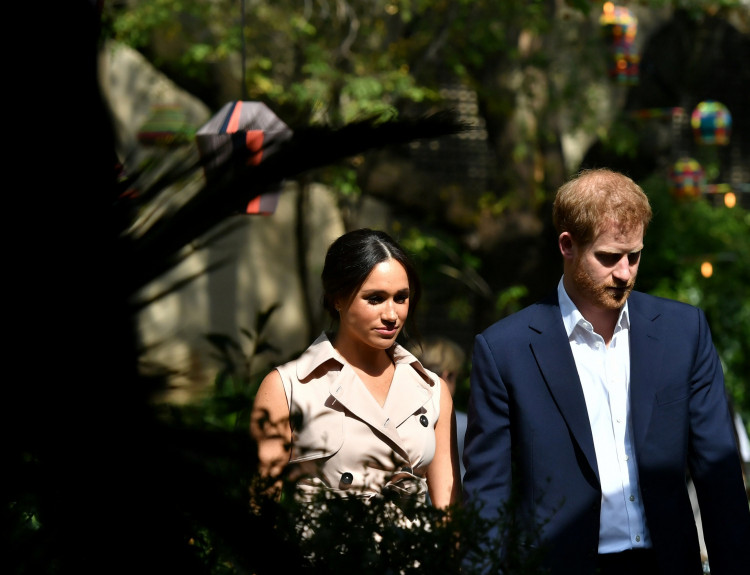
A two-day humanitarian visit to Jordan by Prince Harry and Meghan Markle has ignited criticism online and renewed debate about the couple's evolving public roles since stepping back from royal duties in 2020. The trip to Amman, organized at the invitation of the World Health Organization, placed the Duke and Duchess of Sussex alongside aid workers assisting refugees and injured civilians from regional conflicts, including patients transferred from Gaza.
The visit, which concluded Feb. 26, included meetings with Jordanian officials, visits to hospitals treating wounded children, and stops at refugee programs supported by humanitarian groups. The couple also met with World Central Kitchen staff delivering food aid to displaced communities.
Despite the humanitarian focus, the trip quickly became a flashpoint on social media, where critics questioned the purpose and optics of the Sussexes' presence in the region. One widely shared post on X from the Royal News Network described the visit as a "useless exercise," fueling online debate about whether the couple's activities resembled unofficial diplomatic engagements.
The visit also drew scrutiny in London, where officials emphasized that the Sussexes no longer represent the British government or the monarchy in an official capacity. British media reports indicated the couple stopped by the residence of the U.K. ambassador to Jordan, though the Foreign Office was not involved in organizing the visit.
The controversy stood in contrast to praise from Dr. Tedros Adhanom Ghebreyesus, director-general of the World Health Organization, who highlighted the couple's engagement with humanitarian programs.
"I am grateful [for their] generosity and compassion... bringing attention to the need for sustained action," Dr. Tedros wrote in a message posted on X alongside photographs of the Sussexes visiting a hospital ward treating injured children.
During the visit, Meghan was photographed speaking with patients, including a 14-year-old burn victim from Gaza named Maria, while Harry met with humanitarian workers and youth groups in refugee camps, including activities organized by the nonprofit QuestScope.
Still, communications experts say the trip exposed a deeper strategic challenge for the couple as they continue building independent careers through Archewell, streaming partnerships and commercial projects.
Renae Smith, founder of the communications agency The Atticism, said the Sussexes may need to draw clearer lines between their respective public roles.
"If I were advising them, I would actually separate the lanes more clearly," Smith told the Daily Express.
Smith argued that Prince Harry's public identity remains closely tied to humanitarian initiatives, including the Invictus Games and advocacy for wounded veterans and displaced communities.
By contrast, she suggested that Meghan's current brand direction increasingly centers on lifestyle media and commercial partnerships.
"She is clearly building a lifestyle and commercial brand," Smith said.
That contrast, she argued, risks creating confusion when both figures appear together in humanitarian settings.
"Meghan, at this point, does not feel aligned with that positioning anymore," Smith said, adding that the couple could benefit from clearer differentiation between their professional roles.
Her advice was direct: "Stick to your lanes and allow each of them to thrive independently rather than trying to blend two very different brand identities into one blurred narrative."
The Jordan trip included multiple public appearances, from meetings with aid officials to visits with refugee youth participating in music and sports programs in Za'atari refugee camp, one of the largest camps for Syrians displaced by the civil war.