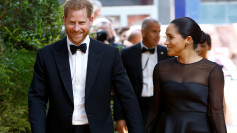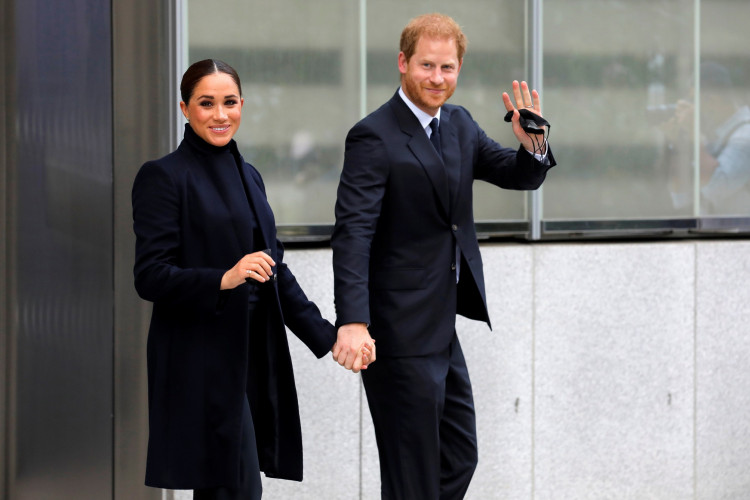
Prince Harry and Meghan Markle are facing renewed scrutiny during their high-profile visit to Australia, as critics and analysts debate both the nature of their unofficial tour and the dynamics of their public appearances.
The four-day trip, which includes stops in Melbourne and visits to institutions such as the Royal Children's Hospital and the Australian War Memorial, has drawn comparisons to formal royal tours despite the couple's decision to step back from official duties in 2020. That resemblance has prompted commentary from royal observers who argue the itinerary mirrors traditional engagements typically undertaken on behalf of the Crown.
Body language analyst Inbaal Honigman, speaking to the Daily Star for Casino.ca, has offered one of the more pointed interpretations of the couple's interactions, suggesting that Prince Harry appears to take a leading role during public engagements. Focusing on footage from Melbourne, she described a moment when Meghan Markle exited a vehicle.
"As Meghan steps out of the car, she briefly throws her hands outward, suggesting a momentary loss of balance," Honigman said. She added, "Harry immediately reaches toward her; his stance is grounded, with both feet firmly planted and his posture strong and confident."
From that interaction, Honigman drew broader conclusions about their dynamic. "He extends his hand with the palm facing downwards, a gesture often associated with control," she said, adding that his positioning "suggests readiness to cover her hand with his, reinforcing the impression of him as the more dominant partner in that moment."
Honigman further argued that similar patterns appeared throughout the tour, particularly during walkabouts where Harry was often seen placing his hand over Meghan's while greeting members of the public. She interpreted this as him "taking the lead" and acting as a "stabilising presence" as the couple navigated mixed public reactions.
Beyond physical gestures, Meghan Markle's public remarks on online harassment have also been dissected. During engagements with young people, she spoke about her experience of sustained online abuse, but Honigman questioned the delivery of those statements.
"When Meghan explains how badly she was trolled, there are some inconsistencies in her body language that could be interpreted as insincerity," Honigman said. She noted that Meghan "maintains strong eye contact with her listeners, as though checking whether they are engaged, relating to her, and accepting her account," adding that a "slight smile" contributed to an impression that she was "seeking a particular response" and had a "clear intention of eliciting sympathy and support."
The interpretation underscores a broader debate around the couple's public positioning. Supporters argue that the Sussexes are independently advancing charitable causes, while critics suggest the structure and optics of the trip resemble a "faux royal tour," raising questions about how they balance private initiatives with the legacy of their former roles.
Royal commentator Richard Fitzwilliams has been among those highlighting the resemblance to traditional royal engagements, suggesting the couple are drawing on familiar formats to maintain influence. At the same time, their supporters maintain that the visit is privately funded and reflects their own priorities rather than any official mandate.