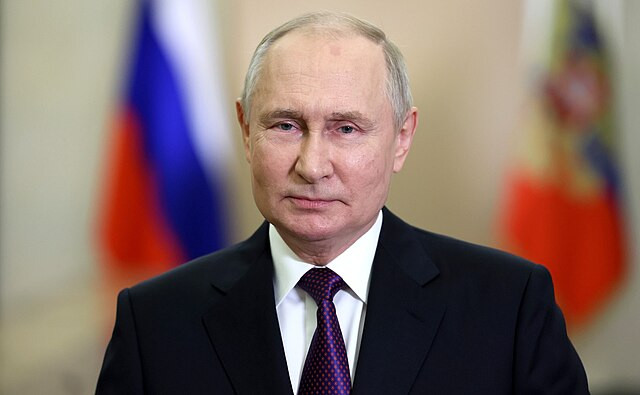
A televised message by Russian President Vladimir Putin marking International Women's Day has reignited long-running speculation about his health after an unedited version briefly aired showing the Kremlin leader coughing repeatedly and restarting his remarks.
The footage, broadcast on Russian state television before being replaced by a cleaned-up edit, captured Putin pausing mid-message as he struggled with a cough while delivering prepared comments. The incident quickly circulated online, prompting renewed discussion about the 72-year-old leader's condition.
During the recording, Putin acknowledged the interruption before restarting the address.
"You know, let me say it again, because I had a tickle in my throat. I almost coughed," Putin told the production team as cameras continued rolling.
He attempted to downplay the issue, attributing the strained voice to fatigue from speaking engagements earlier in the day.
"I spoke a lot today," Putin said, explaining the rasp in his voice.
Moments later, the coughing returned, with Putin covering his mouth while an off-camera voice asked, "Can I bring you some water?"
Putin declined and continued the recording.
"No. Let's continue. Let's get to work....." he responded before restarting the message.
He then resumed the formal script of the broadcast, beginning again with the prepared greeting: "Dear women, I am sincerely happy to congratulate you on International Women's Day. We always celebrate this holiday with the warmest, most heartfelt feelings....."
Although the moment itself lasted only seconds, it stood out because Russian state media typically presents highly controlled footage of the Kremlin leader. The accidental broadcast of the unedited clip offered a rare glimpse behind the polished presentation that usually surrounds Putin's public appearances.
The episode comes amid recurring speculation about the Russian president's health, fueled over the past several years by investigative reports and commentary from political observers.
Earlier reporting by investigative journalists had suggested that Dr. Yevgeny Selivanov, a thyroid oncology specialist at Moscow's Central Clinical Hospital, was among several physicians who had traveled with Putin during official trips. Some reports indicated that as many as 13 medical professionals were linked to the president's travel schedule.
No public evidence has confirmed any illness, and the Kremlin has consistently dismissed speculation about Putin's health.
Still, the appearance of the coughing incident on state television renewed debate about how tightly the Kremlin controls the image of its leader.
Military analyst Denis Kazansk argued that the political impact of such moments can extend beyond the immediate footage. "You build an image of a young and strong leader [Putin], and then someone leaks one video, and this whole image collapses, and a sick, decrepit old man appears before everyone," Kazansk said.
Kazansk suggested the footage may have been allowed to air intentionally.