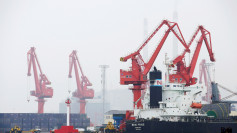
The Strait of Hormuz, one of the world's most critical energy corridors, has become the center of mounting geopolitical pressure as President Donald Trump urges NATO allies and other partners to deploy naval forces to protect commercial shipping following threats from Iran targeting oil tankers linked to the United States and its allies.
Governments across Europe and Asia are now weighing the risks of military involvement in the narrow waterway, which connects the Persian Gulf to global markets and carries a substantial share of the world's oil exports.
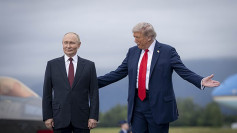
Trump has argued that nations benefiting from the route should help secure it. Speaking about NATO partners, the president warned that the alliance could face a "very bad future" if allies decline to support the U.S. effort to keep the shipping lane open, according to reporting by the Financial Times.
"We've been very sweet," Trump said. "We didn't have to help them with Ukraine... But we helped them. Now we'll see if they help us."
He added: "Because I've long said that we'll be there for them but they won't be there for us. And I'm not sure that they'd be there."
The escalating diplomatic pressure follows a warning from Iran that any oil tanker transporting energy to the United States, Israel or allied countries could become a target.
Iranian officials said vessels connected to those countries could be "immediately destroyed," a threat that has intensified fears of military confrontation in the region.
The potential disruption of tanker traffic has heightened concern across global markets.
The Strait of Hormuz is widely regarded as one of the world's most important energy chokepoints, with millions of barrels of oil passing through the narrow waterway each day. Any interruption could rapidly affect fuel prices and supply chains across Europe, Asia and North America.
Despite the strategic importance of the route, several governments have responded cautiously to Washington's request for naval support.
According to The Guardian, countries including the United Kingdom, China, Japan and South Korea have begun internal discussions about possible responses but have not yet committed to deploying warships.
Officials in those countries have expressed concerns that sending naval vessels into an increasingly volatile region could place their forces at direct risk of attack.
In London, the government of Prime Minister Keir Starmer has signaled a measured approach.
Britain's Ministry of Defence confirmed it is consulting with allies about ways to secure maritime traffic without immediately committing to a military deployment.
UK Energy Secretary Ed Miliband said Britain was coordinating with Washington and international partners on potential responses, emphasizing the global economic impact of disruptions in the waterway.
British officials are also examining alternative security options, including the potential use of mine-hunting drones to safeguard shipping routes without escalating military tensions.
In Asia, governments that rely heavily on Gulf oil imports face similar strategic dilemmas.
Japan, one of the world's largest energy importers, depends on the stability of shipping routes through the Persian Gulf. Yet political leaders in Tokyo have indicated that any decision to deploy warships would require careful deliberation.
Takayuki Kobayashi, chair of the Liberal Democratic Party's policy research council, said Japan would not rule out sending naval forces but stressed that the issue demands caution.
South Korea has likewise refrained from committing to military action.
Officials in Seoul said the government was closely monitoring developments in the Middle East while considering measures to protect its citizens and maintain secure energy supply routes.
France has taken a clearer stance.
French Defence Minister Catherine Vautrin said Paris would not deploy warships to the Strait of Hormuz during the current escalation, emphasizing that the country's military posture remains defensive.
Vautrin said France maintains a "purely defensive position," adding that there were no plans to reposition the Charles de Gaulle aircraft carrier from its current deployment in the eastern Mediterranean.
French President Emmanuel Macron has similarly emphasized that any potential maritime mission would be "purely defensive or escort."