A series of unexplained deaths and disappearances involving at least 20 scientists across the United States and China has prompted a federal investigation, drawing attention to potential vulnerabilities in critical research fields tied to national security, including artificial intelligence, hypersonic weapons and space systems.
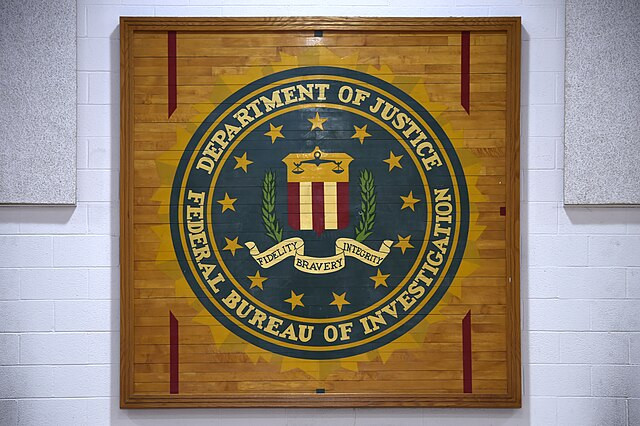
Federal Bureau of Investigation Director Kash Patel confirmed that U.S. authorities are reviewing more than 10 cases involving researchers connected to institutions such as NASA Jet Propulsion Laboratory, Los Alamos National Laboratory and Massachusetts Institute of Technology. The cases date back to 2022 and span disciplines closely aligned with defense and advanced technology programs.
The investigation has intensified after lawmakers on the House Oversight Committee demanded briefings from multiple agencies, including NASA and the Department of Energy, setting a deadline for responses as concerns grow over whether the cases are isolated or part of a broader pattern.
Among the U.S. cases, several individuals remain missing under unclear circumstances. Monica Reza, a 60-year-old engineer affiliated with NASA's Jet Propulsion Laboratory, disappeared during a hiking trip in June 2025. Retired Air Force Major General William Neil McCasland, 68, also vanished after leaving his home in Albuquerque earlier this year. President Donald Trump described the situation as "pretty serious stuff," while adding that he hoped the incidents were coincidental.
Parallel developments in China have added an international dimension to the investigation. According to reporting, at least nine Chinese scientists working in comparable sectors-including military AI, hypersonic systems and satellite technology-have died in incidents officially described as accidents or unexplained events over the past three years.
One of the most closely examined cases involves Feng Yanghe, a 38-year-old researcher at China's National University of Defense Technology. State media reported that Feng died in a traffic accident after leaving a work meeting, though an obituary described him as "sacrificed while performing official duties," language typically associated with military personnel.
Another case involves Zhang Xiaoxin, a senior expert in satellite meteorology and early warning systems, who died in what was reported as a traffic accident shortly after receiving a major military science award. Chinese officials have not publicly acknowledged any pattern, with the Chinese embassy in Washington stating it was "not aware of the relevant situation."
An anonymous researcher cited in reporting said, "The areas are in hypersonics, in military AI, including swarming technology simulations, stuff that could really make a difference. These types of tech seem to be overrepresented in the clusters."
Joseph Rodgers of the Center for Strategic and International Studies said the cases are "scattered across several years at different and only loosely affiliated organisations," underscoring the challenge of establishing a clear link.