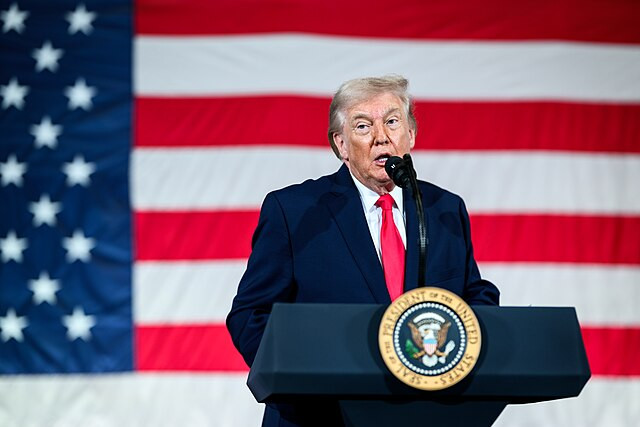
A public rupture between Donald Trump and longtime ally Marjorie Taylor Greene has exposed widening fractures inside the MAGA movement, after Greene accused the president of targeting women he cannot control following his attack on commentator Candace Owens.
The dispute erupted after Trump used his Truth Social platform to mock Owens, sharing a fabricated magazine-style image labeling her the "vile person of the year" while calling her "despicable" and a "low-IQ individual." The post came in response to Owens' remarks about Brigitte Macron, which have already drawn legal action from the French president and first lady.
Greene responded with an unusually direct rebuke, writing that Trump's behavior was "cruel" and escalating into a broader critique of his treatment of women. "President Trump hates women he can't control, who don't worship him, women who actually worship God and are much more intelligent than he is," Greene said in a post that quickly circulated across political and media circles.
The exchange marks a rare and highly visible break between Trump and one of his most loyal congressional supporters. Greene has been among the most outspoken defenders of Trump in Washington, making her criticism notable not only for its content but for its source.
Trump's original post targeting Owens was tied to her repeated claims about Brigitte Macron, which have become the subject of a defamation lawsuit filed in Delaware in 2025. According to reporting cited in the source material, Tom Clare, a lawyer for the Macrons, said Brigitte Macron found the allegations "incredibly upsetting," adding that the claims had become a distraction for the French presidency.
Owens has publicly stood by her assertions. In remarks cited in the BBC's coverage, she said she would put her "entire professional reputation" behind the claim regarding Macron. As of the latest reporting referenced in the material, Owens had not publicly responded to Trump's post.
Greene's criticism extended beyond Owens' defense. She invoked broader grievances, alleging Trump had failed to support women she described as victims connected to the Jeffrey Epstein case and claiming he had labeled her a "traitor" for backing them. She also criticized his personnel decisions, asserting that women in his orbit had been disproportionately pushed out.
The dispute widened further as Greene referenced figures such as Laura Loomer, suggesting internal political advice surrounding Trump had damaged both his standing and the Republican Party. Her remarks signaled not just a personal disagreement but a deeper ideological and strategic divide within Trump-aligned circles.
Greene framed the issue in electoral terms, warning that Trump's rhetoric could alienate female voters. "No matter what you think about any of us women, as we are all different from each other, whether you like us or not, one thing is incredibly clear, Trump hates women," she wrote, adding that such messaging would turn "the majority of women in America against him."