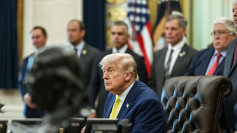
Donald Trump is set to become the first sitting U.S. president to appear inside an official American passport, after the U.S. Department of State approved a limited-edition "America250" design tied to the nation's 250th anniversary, a move that is already drawing sharp political criticism and raising questions about the role of personal imagery in state-issued documents.
The commemorative passports, expected to be released shortly before July 4, will feature a portrait of Trump alongside his signature, according to reports detailing the final design. The initiative marks a departure from longstanding U.S. passport traditions, which have historically emphasized national symbols rather than individual political figures.
Officials familiar with the rollout said the passports will be produced in a limited batch, with availability restricted to a Washington, D.C., passport office. The scale of the release underscores its symbolic nature rather than a wholesale redesign.
- Estimated production: 25,000-30,000 units
- Distribution: limited release through Washington, D.C. office
- Alternative: standard passports remain available upon request
The redesign includes notable visual changes. The interior page reportedly places Trump's image over text from the Declaration of Independence, with his signature rendered in gold. The cover format also shifts from the traditional layout, reversing the placement of "United States of America" and "Passport."
The announcement prompted immediate criticism from lawmakers. Raja Krishnamoorthi described the initiative as "absurd," stating, "Putting Donald Trump's face on US passports is absurd." He added, "These documents represent the American people, not one man's megalomania."
The criticism reflects broader concerns among opponents that the passport redesign blurs the line between institutional identity and personal branding. U.S. passports have long functioned as neutral instruments of citizenship, issued under the authority of the Secretary of State rather than the president, and featuring historical imagery such as landmarks, artwork and quotations.
The current passport design, updated in 2021, includes scenes such as Francis Scott Key observing the bombardment of Fort McHenry and a quote from Anna Julia Cooper emphasizing universal freedom. While Mount Rushmore appears within the booklet, it is presented as part of a broader national landscape rather than a tribute to a living figure.
Supporters of the commemorative passport have framed it differently, linking it to preparations for the America250 celebrations and describing it as a patriotic initiative marking a milestone anniversary. Within the administration, the effort is part of a wider push to integrate presidential branding into public-facing government projects.