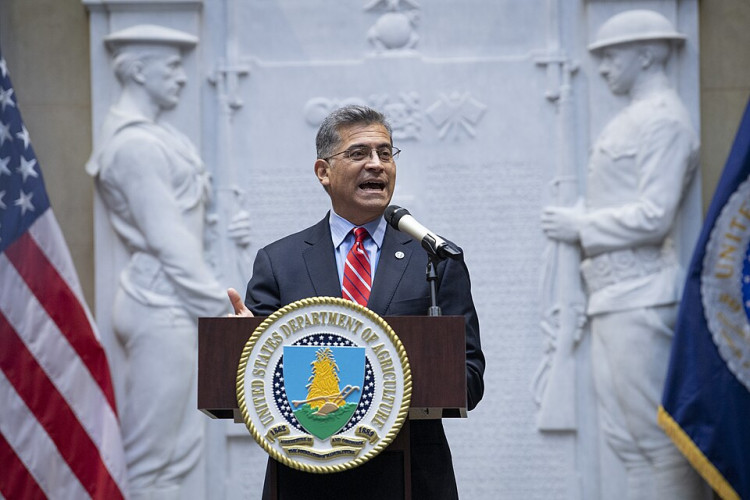
Xavier Becerra emerged as the focal point of a combative California governor debate Tuesday night in Claremont, where eight candidates repeatedly clashed over healthcare, public safety and economic policy just weeks before the June 2026 primary to replace Gavin Newsom.
The 90-minute event at Pomona College, hosted by CBS California affiliates and Asian Pacific American Public Affairs, underscored how the race has tightened following the withdrawal of Democratic congressman Eric Swalwell. With ballots set to reach voters imminently, the debate offered one of the final high-profile opportunities for candidates to define themselves in a crowded field.
Becerra, a former California attorney general and U.S. health and human services secretary, has gained momentum in recent weeks, drawing intensified scrutiny from rivals across the political spectrum. His central position on stage mirrored his standing in the race, as candidates repeatedly redirected questions toward his record.
San Jose Mayor Matt Mahan pivoted from a wildfire discussion to criticize Becerra's tenure in Washington, while Republican candidate Steve Hilton challenged Becerra's proposal to declare a state emergency to freeze home insurance policies. "Have you read the statute that sets out the governor's emergency powers?" Hilton asked. When Becerra replied that he had, Hilton responded: "Then you would know that what you're proposing is not in there. You can't do it." Becerra countered: "That's not correct."
After the debate, Becerra dismissed the coordinated attacks as a sign of his rising position, stating "that's what happens when you shoot to the top." He defended his healthcare record, arguing he had "expanded healthcare beyond what we had ever seen in the country's history," while framing himself as the only candidate with direct experience running a large system.
The debate frequently descended into overlapping exchanges, with moderators struggling to maintain order as candidates interrupted one another. Pomona College student Ryan Kossarian captured the tone of the evening, remarking: "Wow, that was a bit of a mess." Moderator Pat Harvey later joked, "Thank you all of you for having coffee before you came out here tonight. This has been electric."
The field reflects a broad ideological spectrum, with Democratic candidates including Tom Steyer, Katie Porter and Antonio Villaraigosa competing alongside Republicans Hilton and Riverside County Sheriff Chad Bianco, as well as education official Tony Thurmond. Under California's nonpartisan primary system, only the top two finishers advance to the November election, regardless of party affiliation.
Katie Porter leaned into affordability issues while delivering sharp personal critiques, at one point quipping during a chaotic exchange, "This is worse than my teenagers at dinner." She also challenged Steyer's climate platform, asking: "So fossil fuel companies who were causing great damage while you were investing in them?" and later accusing him of paying "the lowest tax rate on this stage."
Mahan positioned himself as a centrist alternative, criticizing both Republican and progressive approaches while arguing that "we don't know how to pay for single-payer." He also dismissed Becerra's insurance proposal bluntly, stating, "Xavier's plan won't work."
Republican voices focused heavily on public policy failures, with Bianco warning that if Democrats retain control, "these kids are all going to have to move," reflecting broader conservative critiques of California governance.