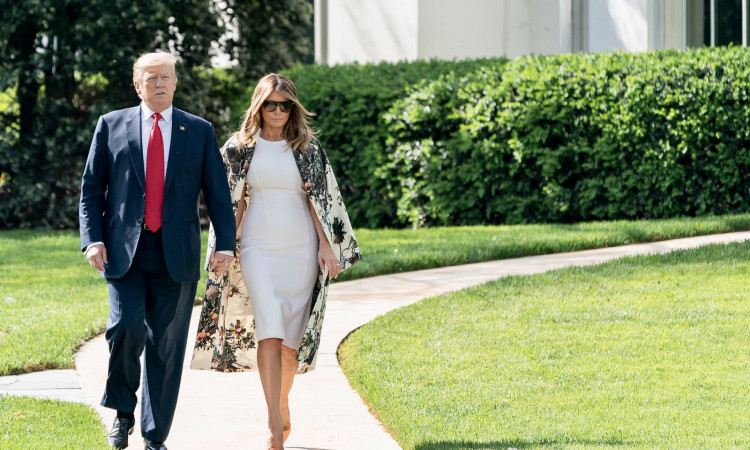
Donald Trump drew renewed attention to his relationship with Melania Trump after a remark about their marriage during a formal White House event attended by King Charles III went viral, prompting scrutiny of the couple's public dynamic.
Speaking before an audience that included international dignitaries, Trump referenced the 63-year marriage of his parents, using it as a benchmark for longevity. "They were married for 63 years. And excuse me, if you do not mind, that is a record we will not be able to match," he said, before turning to Melania Trump and adding, "I am sorry it is not going to work out that way. We will do well, but we are not going to do that well."
The comment, delivered in what appeared to be a light tone, produced a noticeable pause in the room and quickly circulated online, where viewers focused less on the remark itself than on Melania Trump's reaction. Clips of the exchange spread across social media platforms, amplifying interpretations of the moment.
Observers pointed to Melania Trump's reserved demeanor and limited visible response as evidence of tension, while others dismissed the interaction as a routine example of composure during a formal diplomatic setting. The divergence in interpretation underscores how even minor exchanges involving public figures can take on broader significance.
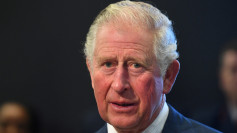
The setting heightened the attention. The event formed part of a high-profile visit involving King Charles III, placing the interaction within a diplomatic context where protocol and optics carry additional weight. Against that backdrop, the exchange was scrutinized not only as a personal moment but also as a reflection of public image.
The episode also follows a series of recent controversies involving the Trump family and media figures, including calls by both Donald and Melania Trump for action against late-night host Jimmy Kimmel. That broader context has contributed to increased focus on the First Couple's public appearances and messaging.
Online commentary extended beyond the remark itself to include analysis of body language and physical spacing between the two during the event. Some users interpreted the visual cues as reinforcing perceptions of distance, while supporters argued such readings were exaggerated and detached from the realities of formal public appearances.