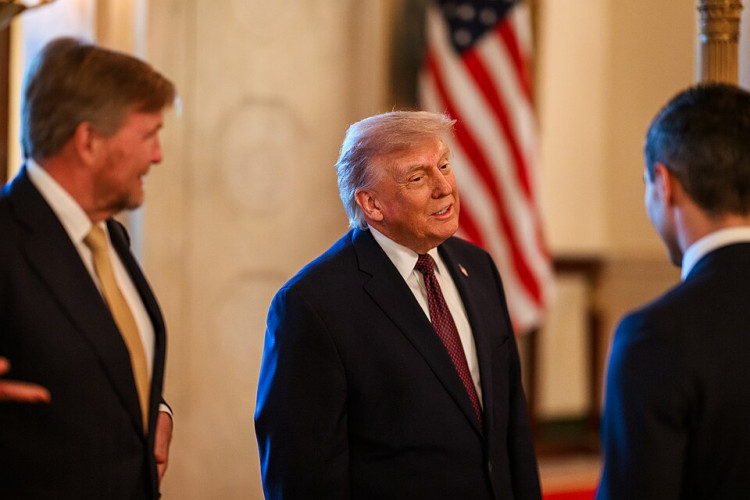
Donald Trump is facing signs of waning support in Venezuela, according to new polling data, after initially enjoying a surge in popularity following the U.S.-backed removal of Nicolás Maduro. A late-April survey by the Venezuelan firm Meganálisis indicates that public sentiment has shifted sharply, complicating Washington's strategy in the country.
Trump had suggested his popularity extended beyond U.S. borders, telling reporters on April 6, "The people of Venezuela, they say, if I ran for president of Venezuela: I'm polling higher than anybody has ever polled in Venezuela." He added, "I will quickly learn Spanish. It won't take too long. I'm good at languages and I will go to Venezuela. I'm going to run for president."
The Meganálisis poll, conducted between April 13 and April 20, shows that gratitude toward Trump fell to 47.08%, a steep decline from 82.9% in February and 74.5% in March. The same survey found that 89.13% of respondents opposed continued U.S. support or negotiations with acting president Delcy Rodríguez.
The drop marks a significant reversal from earlier sentiment following the January operation that removed Maduro from power. At that time, Venezuelans-many of whom had endured years of economic collapse and political repression-viewed the intervention as a turning point. February polling reflected that mood, with 90.1% opposing Rodríguez's leadership while expressing strong support for U.S. involvement.
The shift appears tied to Washington's evolving posture toward Rodríguez, a longtime Maduro ally who has remained in power during the transition. Trump has publicly praised her, calling her "a terrific person" and citing "tremendous progress" in discussions covering oil, trade, and national security cooperation.
For many Venezuelans, however, the issue has moved beyond Maduro's removal to the composition of the post-transition government. The April poll suggests dissatisfaction with the continuation of figures linked to the previous regime, particularly as expectations for rapid democratic reform remain unmet.
U.S. officials have signaled that a transitional period is necessary. Marco Rubio said in late March that Venezuela would require "free and fair elections," adding, "We have to be patient, but we also can't be complacent." The polling data indicates that such patience may be eroding among the Venezuelan public.
The survey also highlights strong support for opposition leader María Corina Machado. According to Meganálisis, Machado received:
- 71.25% support in an open electoral scenario
- 84.36% support in a head-to-head matchup against Rodríguez
- Rodríguez received 4.95% in the same head-to-head scenario
These figures underscore a widening gap between U.S. policy and local political preferences, particularly regarding leadership legitimacy.
At the same time, Rodríguez's government has been pursuing economic normalization. According to Reuters, energy major BP signed a memorandum of understanding to develop offshore gas resources, while Rodríguez has promoted foreign investment during regional outreach, including a visit to Barbados.