Donald Trump told supporters at The Villages in Florida that he is "much younger" than the audience, rejecting the label of senior citizen during a campaign-style appearance that also highlighted Social Security policy and coincided with mounting scrutiny over his administration's handling of the Iran conflict.
The remarks, delivered Friday in one of the country's largest retirement communities, came as Trump, 79, returned to public events following a recent attempted attack at the White House Correspondents' Association Dinner. They also unfolded amid ongoing debate in Washington over the legal limits of presidential war powers in the Middle East.
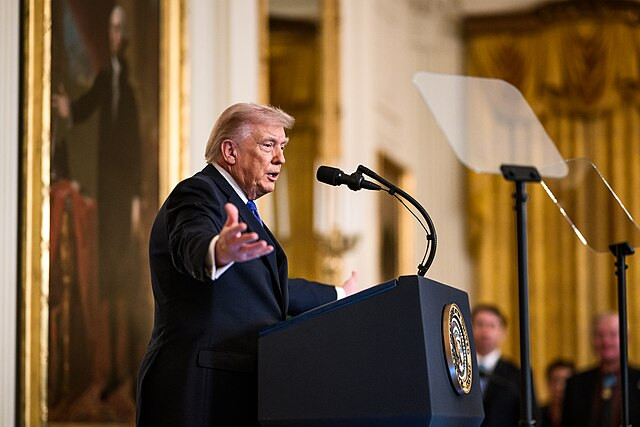
Addressing a crowd largely composed of retirees, Trump touted economic measures affecting older Americans, stating: "And here in the Sunshine State, we've issued 2.5 million Florida seniors over $13 billion." He then distanced himself from that category, adding: "Now, think of that. Now, I don't happen to be a senior. I'm much younger than you. I'm a much younger man than you."
The assertion contrasts with widely accepted definitions of the term. Federal agencies and private-sector standards generally classify individuals aged 65 and older as senior citizens, placing Trump squarely within that demographic ahead of his 80th birthday in June.
Trump continued to frame the exchange with humor and defiance. Surveying the crowd, he said, "Look at you, old guys. Wouldn't you like to be my age?" before adding, "Now, I'm much, much younger than the people in this room, but I feel I can relate to you anyway." The lines drew laughter but also underscored a recurring theme of projecting stamina and vitality.
Anticipating media coverage, Trump addressed reporters directly, telling supporters: "See, now the fake news will go tonight, and they'll say, he's claiming to be younger than the people. Do you understand?" The remark reflects a broader pattern of preemptively challenging press interpretations of his statements.
The Florida event served dual purposes: reinforcing Trump's messaging to older voters while advancing policy proposals tied to retirement security. He reiterated his pledge to eliminate taxes on Social Security benefits and highlighted administrative changes intended to improve access to the system, positioning the proposals as central to his economic platform.
Beyond domestic policy, the appearance came as the administration faces a critical juncture under the War Powers Resolution of 1973 regarding U.S. military operations tied to Iran. Officials have argued that a ceasefire effectively ended hostilities, potentially allowing the White House to avoid seeking congressional authorization.
Pete Hegseth told lawmakers the ceasefire had "suspended" the conflict, while an unnamed senior official said "the hostilities that began on Saturday, Feb. 28 have terminated." However, tensions persist in the Strait of Hormuz, where U.S. naval operations continue to restrict Iranian shipping.
Lawmakers from both parties have questioned that interpretation. Susan Collins warned, "That deadline is not a suggestion; it is a requirement," emphasizing that further military action should come with "a clear mission, achievable goals and a defined strategy for bringing the conflict to a close."