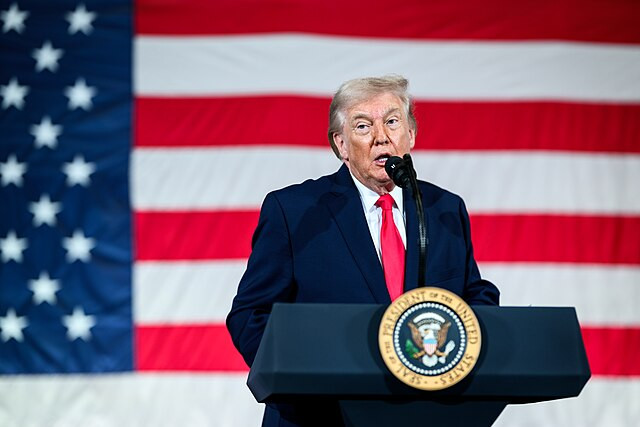
Donald Trump will undergo a full medical and dental evaluation at Walter Reed National Military Medical Center on May 26, according to the White House, a routine presidential health appointment that has rapidly become another political flashpoint amid growing scrutiny over the president's age, stamina and cognitive fitness.
The White House said the visit would include standard preventive healthcare evaluations and meetings with military personnel and hospital staff. Officials emphasized that the examinations are part of ordinary presidential health monitoring and not tied to any newly disclosed medical condition.
Still, the announcement immediately reignited public debate over Trump's physical condition as he approaches his 80th birthday next month. At 79, Trump is already the oldest president ever inaugurated in the United States, making every public health disclosure politically charged in a deeply polarized environment.
Administration officials have repeatedly insisted there are no immediate concerns regarding Trump's ability to perform his duties. Previous examinations by White House physicians described the president as fully fit for office, while emphasizing strong cardiovascular indicators and active daily functioning.
Navy Captain Sean Barbabella previously stated that some of Trump's cardiovascular metrics reflected a biological heart-health age younger than his chronological age, though detailed medical records have not been fully released publicly.
At the same time, visible signs of aging have fueled ongoing speculation. Public appearances over recent months have prompted discussion online after observers noticed bruising on Trump's hands, sometimes partially concealed with makeup, as well as swelling around his lower legs and ankles.
The White House attributed those symptoms to chronic venous insufficiency, a common vascular condition among older adults in which blood pools in the veins, causing swelling and discomfort. Officials also said Trump follows a daily aspirin regimen as part of a cardiovascular prevention plan intended to reduce the risk of heart attack and stroke.
Critics, however, have increasingly framed the upcoming Walter Reed visit as more than a routine checkup. Some opponents have speculated that cognitive evaluations could quietly form part of the broader examination process, though the White House has given no indication that dementia-related testing has been ordered.
Trump himself has repeatedly rejected questions about his mental sharpness. In recent public remarks, the president has defended both his physical endurance and cognitive abilities, often pointing to his demanding travel schedule and campaign appearances as evidence that he remains highly functional.
He has also repeatedly referenced past performance on cognitive screening tests, including the Montreal Cognitive Assessment, which he previously claimed to have "aced." Trump has described portions of the test publicly, using them as political proof points against critics questioning his mental acuity.
Medical experts caution, however, that such screenings are designed primarily to detect potential signs of neurological impairment rather than measure intelligence or advanced cognitive performance. Standard cognitive assessments often involve basic memory, orientation and recognition exercises.