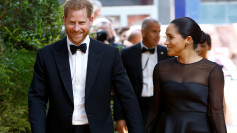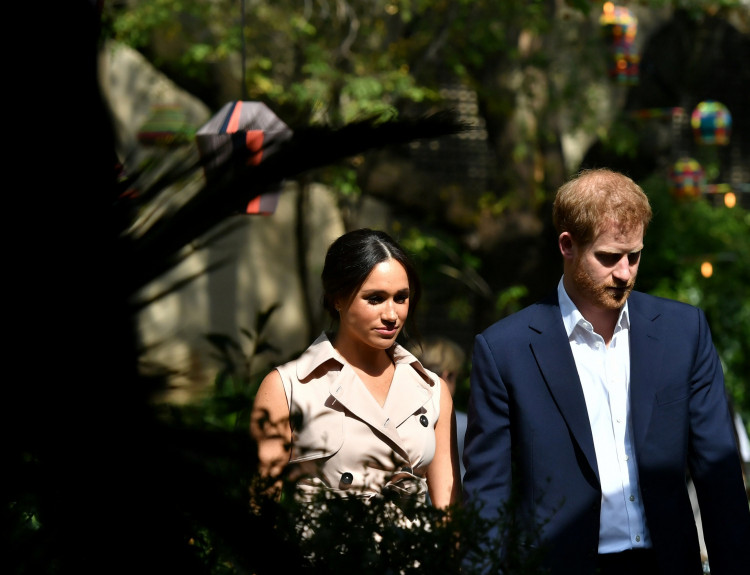
Meghan Markle faced renewed criticism this week after sharing an Instagram photo featuring Princess Lilibet just hours before delivering a speech in Geneva warning about the dangers social media poses to children.
The Duchess of Sussex appeared Sunday at the Lost Screen Memorial event alongside Tedros Adhanom Ghebreyesus, where she urged stronger protections for young people online and criticized platforms driven by "relentless algorithms, exploitative engagement, and endless exposure to harmful content that they are not seeking out."
The event, co-hosted by the World Health Organization and the Sussexes' Archewell Foundation, featured illuminated portraits of children whose families said they died following cyberbullying and online harms.
But attention quickly shifted from Markle's speech to a mirror selfie she posted the previous day showing Lilibet sitting near her feet inside a walk-in wardrobe while the duchess selected outfits. Although the child's face was not visible, critics questioned the timing of the image given Markle's public campaign against online harms.
Journalist Tom Sykes, writing on Substack after attending the Geneva event, called the post "staggeringly tone-deaf."
"Yes, a woman who is about to stand alongside the world's most senior public health official and talk about the measurable and preventable harms of exposing children to social media has just - voluntarily, for no apparent reason other than self-promotion - exposed her own child to social media," Sykes wrote.
Sykes also argued that shielding children's faces while still featuring them prominently online creates greater public curiosity rather than genuine privacy. He described the Sussexes' approach to sharing images of their children as contradictory, especially given their repeated warnings about online culture and harassment.
Royal commentator Richard Fitzwilliams echoed some of that criticism during an interview with GB News, saying: "The Sussexes have campaigned against online abuse for years, and it is an extremely serious problem."
However, he added: "They certainly seek publicity, and they want to control it, having so brutally attacked the royal family."
Fitzwilliams also questioned the couple's long-running practice of posting photographs of their children from behind or partially obscured.
"Their habit of photographing their children from the back so their faces are usually not revealed is very curious," he said. "That is obviously up to them, but it is odd."
Online reaction became deeply polarized following the speech and Instagram post. Some social media users accused Markle of using her children selectively for publicity while simultaneously criticizing digital exposure.
One X user wrote: "She's quite happy to serve her own kids up on social media to complete strangers for commercial purposes without their consent."
Another posted: "This Meghan? The one who uses her children online for clicks to her website and then the media to report on how 'sweet' it is? Does that not strike you as a tad hypocritical?"
Supporters of the duchess pushed back against the criticism. A source quoted by Page Six defended Markle's post, saying: "Many mothers share content of their children in a proud and positive manner - Meghan does it tastefully and without showing their faces, just as many other well-known people do."
The source added that Markle's concerns were focused on "dangerous algorithms and content" affecting teenagers online, rather than carefully curated family photographs shared by parents.