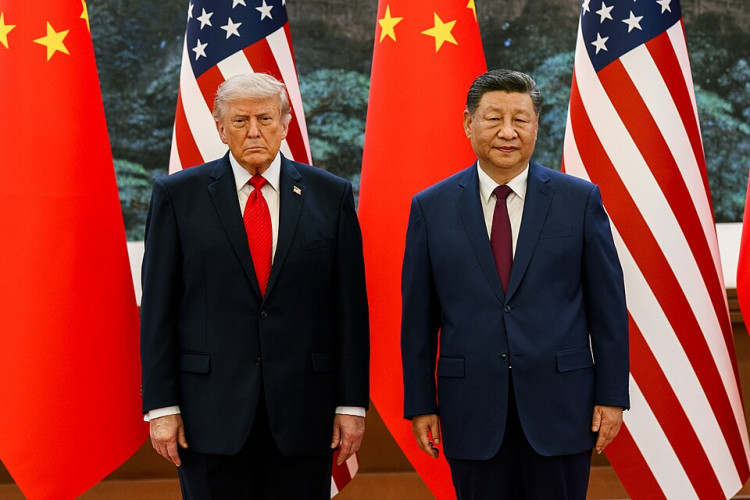
Donald Trump faced ridicule across Chinese social media during his recent visit to Beijing, where online users mocked the American president as "Comrade Nation Builder" and some commentators described him as the "weakest" US leader to negotiate with Xi Jinping in decades.
Trump's three-day trip to China from May 13 to May 15 unfolded against a backdrop of mounting geopolitical tension, including the ongoing conflict involving Iran, growing scrutiny over US foreign policy, and renewed debate about Washington's long-term strategic position relative to Beijing.
The nickname circulating online, "Chuan Jianguo," loosely translates to "Trump the Nation Builder" or "Comrade Nation Builder." The phrase has existed for years in Chinese internet culture, reflecting a sarcastic theory that Trump's policies have unintentionally strengthened China's global position while weakening the United States.
The renewed wave of commentary intensified as Trump participated in high-profile ceremonies and meetings in Beijing. Chinese social media users mocked what they viewed as a contrast between the lavish diplomatic pageantry surrounding the visit and the broader political challenges confronting the United States domestically and internationally.
Analysts quoted by the Daily Beast argued that the symbolism of the visit reflected a major shift in perceived global power dynamics. While imperial China historically required foreign envoys to perform the "three kneelings and nine prostrations" before the emperor, modern diplomatic protocol has become more subtle, though critics argued the underlying hierarchy remains visible in strategic negotiations.
Those critics claimed Trump entered Beijing politically weakened after years of policy decisions they believe damaged traditional pillars of American influence.
Among the criticisms raised were:
- Reduced investment in research and higher education
- Cuts affecting scientific and technological development
- Trade wars that disrupted alliances with key partners
- Immigration policies discouraging international students and researchers
- Foreign aid reductions that opened new opportunities for Chinese investment abroad
At the same time, China has continued expanding investment in renewable energy, infrastructure, and advanced manufacturing sectors, areas where Beijing increasingly competes directly with the United States for global influence.
The Trump administration has consistently defended its policies as prioritizing American sovereignty, domestic industry, and energy independence. Trump allies argue his tariff strategy and tougher trade posture forced China into negotiations and protected US manufacturing jobs.
Still, concerns about Taiwan and the Indo-Pacific shadowed the Beijing meetings. China specialists cited in the report worried Trump could privately soften Washington's posture toward Beijing's long-term ambition of bringing Taiwan under Chinese control, particularly as US military and diplomatic attention remains divided across multiple global conflicts.