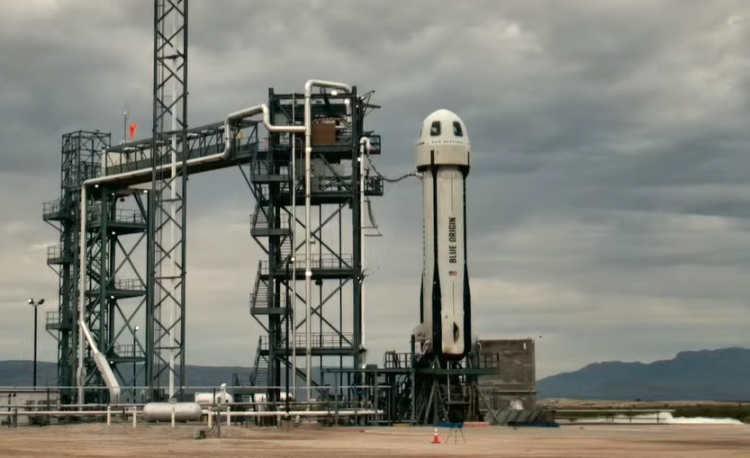
Blue Origin suffered the most serious setback in its history after its New Glenn rocket exploded during a static fire test at Cape Canaveral Space Force Station in Florida, destroying the launch vehicle and forcing the company to halt preparations for an upcoming mission tied to Amazon's Project Kuiper satellite network.
The explosion occurred on May 28 at Launch Complex 36 during a routine pre-launch engine test, according to reports from TechCrunch and Ars Technica. The rocket, powered by seven BE-4 engines, was undergoing a static fire test-a critical milestone before launch-when a catastrophic failure occurred shortly after ignition.
No injuries were reported, and Blue Origin confirmed that all personnel were safely accounted for following the incident. Founder Jeff Bezos later acknowledged the loss while emphasizing that investigators had not yet determined the cause of the failure.
The destruction of the rocket represents a major blow to Blue Origin's ambitions in the commercial launch market. New Glenn is the centerpiece of the company's long-term effort to compete with SpaceX in the heavy-lift sector, an area increasingly dominated by Elon Musk's launch business.
Blue Origin described the incident as an "anomaly" and said engineering teams had immediately begun assessing the damage and investigating the sequence of events that led to the explosion. The Federal Aviation Administration confirmed it was aware of the incident and said there had been no impact on civilian air traffic.
Because static fire tests are conducted with fully fueled launch vehicles, industry analysts noted that failures at this stage can be especially destructive. Reports indicated that both the rocket and portions of the surrounding launch infrastructure sustained significant damage, though the full extent has not yet been disclosed.
The timing is particularly challenging for Blue Origin. The vehicle lost in the explosion was expected to support one of the first launches of Amazon's Project Kuiper broadband satellites, a key initiative designed to compete with SpaceX's Starlink network.
The incident comes only weeks after Blue Origin completed an investigation into a separate upper-stage issue that affected New Glenn's third flight earlier this year. While that problem was isolated to a different portion of the rocket, the latest failure raises fresh questions about the pace at which the company can scale launch operations.
The explosion also carries implications beyond Amazon's commercial satellite ambitions. NASA has selected New Glenn for future lunar cargo missions and views Blue Origin as an important participant in long-term Artemis exploration efforts. Any extended grounding of the rocket could affect mission planning across multiple government and commercial programs.
Before the accident, New Glenn had achieved several important milestones, including successful booster recovery demonstrations that positioned the vehicle as a reusable launch system capable of competing for high-value government and commercial contracts.
Key details surrounding the program include:
- New Glenn is powered by seven BE-4 engines.
- The destroyed vehicle was being prepared for a Project Kuiper mission.
- No operational satellites were onboard during the test.
- The explosion occurred at Cape Canaveral's Launch Complex 36.
- No injuries were reported.
- A federal investigation is expected before flight operations resume.
According to Bloomberg, Blue Origin has invested more than a decade developing New Glenn as part of its strategy to establish itself as a major force in orbital launch services. The rocket is intended to serve commercial customers, national security missions, scientific payloads, and future lunar operations.
NASA Administrator Jared Isaacman said the agency would support a thorough review of the incident and evaluate any potential effects on upcoming missions as additional information becomes available.