Blue Origin suffered one of the most significant setbacks in its history Thursday night when its New Glenn rocket exploded during a ground test in Florida, destroying the launch vehicle and prompting reactions from industry leaders including SpaceX founder Elon Musk and Blue Origin founder Jeff Bezos.
The explosion occurred at Launch Complex 36 near Kennedy Space Center on Florida's Space Coast, where Blue Origin was preparing the heavy-lift rocket for a future mission. The vehicle was undergoing a static fire, or "hotfire," test when a catastrophic failure triggered a series of explosions that engulfed the rocket in flames.
Videos captured by observers quickly spread across social media, showing an initial blast near the base of the rocket followed by a second explosion higher up the vehicle. Within seconds, the towering New Glenn booster disappeared inside a massive fireball, illuminating the night sky above the launch complex.
The incident immediately drew attention across the aerospace industry, not least because New Glenn is central to Blue Origin's long-term ambitions to compete with SpaceX in the commercial launch market and support missions for customers including Amazon's Project Kuiper satellite network.
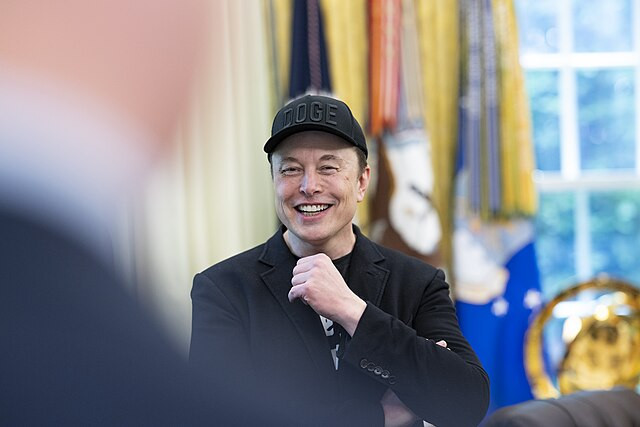
Among the first high-profile figures to respond was Elon Musk, whose SpaceX remains Blue Origin's primary rival in the race to dominate commercial space launches.
Posting on X, Musk wrote: "Most unfortunate. Rockets are hard."
The brief message was widely interpreted as an acknowledgment of the technical challenges involved in rocket development, a field in which both companies have experienced costly test failures while pursuing reusable launch systems.
Blue Origin confirmed the explosion in a statement, describing it as an "anomaly" during testing.
"We experienced an anomaly during today's hotfire test. All personnel have been accounted for. We will provide updates as we learn more," the company said.
The company did not immediately disclose the extent of the damage or provide details regarding the sequence of events that led to the failure. Federal investigators and company engineers are expected to examine telemetry and test data as part of the investigation.
Later, Jeff Bezos addressed the incident publicly, emphasizing that no injuries had occurred and pledging to continue the program despite the loss.
"All personnel are accounted for and safe. It's too early to know the root cause, but we're already working to find it. Very rough day, but we'll rebuild whatever needs rebuilding and get back to flying. It's worth it," Bezos wrote on X.
The explosion represents a major challenge for a program that has already consumed years of development and billions of dollars in investment. New Glenn, powered by seven BE-4 engines, is designed to carry large commercial, scientific, and government payloads into orbit and is viewed as a cornerstone of Blue Origin's effort to establish itself as a leading launch provider.
The vehicle involved in Thursday's test was reportedly being prepared for an upcoming mission that would have supported Amazon's growing Project Kuiper broadband satellite constellation. Amazon later confirmed that no operational satellites were aboard the rocket during testing.
The incident also attracted attention from government officials. Rep. Mike Haridopolos, chairman of the House Science, Space, and Technology Subcommittee, said he had spoken with NASA leadership shortly after the explosion.
"I've already spoken with @NASAAdmin Jared Isaacman regarding the explosion of Blue Origin's New Glenn rocket tonight at Kennedy Space Center," Haridopolos wrote on X.
He added: "I am grateful there were no reported injuries and thankful for the first responders, engineers, and launch crews who acted quickly. Praying for Florida's Space Coast and everyone involved."