(Photo: REUTERS/Jeenah Moon/File Photo)
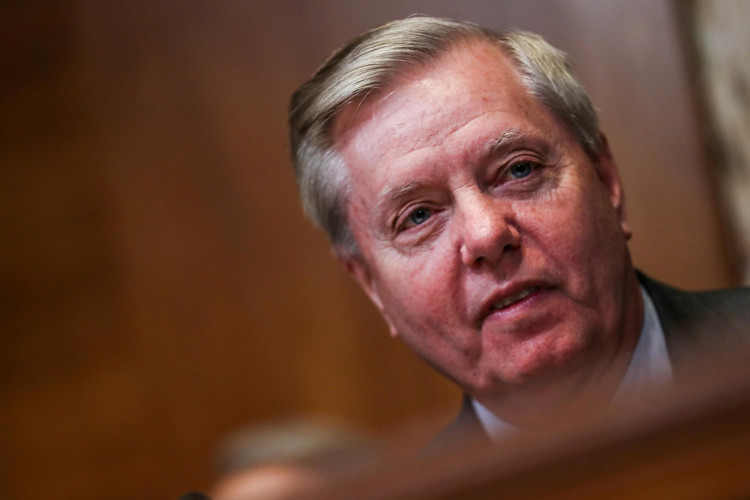
The death of Sen. Lindsey Graham has set in motion a leadership transition that could reshape Republican budget negotiations in the Senate, with Wisconsin Republican Sen. Ron Johnson emerging as the expected successor to lead the influential Senate Budget Committee.
Johnson, a three-term senator known for advocating aggressive reductions in federal spending, is next in line among Senate Republicans for the committee's chairmanship. His appointment remains subject to approval by the Republican Conference and confirmation by the full Senate, but his office indicated he is prepared to assume the role.
The transition comes at a critical moment for congressional Republicans as they weigh another budget reconciliation package, a legislative process that allows certain fiscal measures to pass the Senate with a simple majority rather than the 60 votes typically required to overcome a filibuster.
Grace Carnathan, a spokesperson for Johnson, said the senator is ready to step into the position.
"Senator Johnson is prepared to serve as budget chair when announced," Carnathan said.
The vacancy follows Graham's death on Saturday at age 71. His office said the South Carolina Republican died from a heart condition related to hardened arteries. Until his final days, Graham remained actively involved in both domestic fiscal policy and high-profile foreign policy initiatives, including Republican reconciliation legislation and diplomatic efforts aimed at advancing normalization between Saudi Arabia and Israel.
As chairman, Graham helped Republicans move two reconciliation measures through Congress during this session. One focused primarily on extending tax policies, while another centered on immigration enforcement funding during President Donald Trump's administration.
Johnson is expected to inherit responsibility for guiding any future reconciliation legislation. Throughout recent budget debates, he argued that federal spending should be reduced more aggressively and repeatedly expressed concerns about the nation's long-term fiscal outlook. While he has supported pursuing another Republican-backed reconciliation package, he has also questioned whether sufficient consensus exists within the conference to advance another major bill.
The Senate Budget Committee plays a pivotal role in establishing congressional spending priorities and drafting budget resolutions that determine whether reconciliation procedures can be used for future legislation. As chairman, Johnson would hold significant influence over the structure and timing of any new fiscal package.
Johnson's political evolution has also attracted attention in recent years. Initially critical of Donald Trump during the early stages of Trump's political rise, the Wisconsin senator later became one of the president's strongest allies on Capitol Hill and has consistently supported many of the administration's legislative priorities.
Graham's final weeks reflected the breadth of issues occupying his agenda beyond domestic politics. According to the reports, he remained deeply engaged in efforts to revive negotiations aimed at normalizing diplomatic relations between Saudi Arabia and Israel, viewing such an agreement as a cornerstone of a broader Middle East strategy following tensions involving Iran.
Those diplomatic discussions reportedly included conversations with President Donald Trump, senior U.S. envoys Jared Kushner and Steve Witkoff, Israeli Prime Minister Benjamin Netanyahu's close adviser Ron Dermer, Saudi Ambassador to Washington Princess Reema bint Bandar, and Saudi Foreign Minister Prince Faisal bin Farhan.
According to the reports, Graham had planned additional travel to both Saudi Arabia and Israel after the Israeli elections and the U.S. midterm elections to determine whether negotiations could resume. His objective was to establish the framework for a potential agreement before the next Congress convened in January, though significant obstacles remained, including congressional approval and questions over whether Israel would accept Saudi conditions tied to normalization.
The reports also said Graham remained engaged in discussions on other international issues during his final hours, including a proposed Russia sanctions bill, his recent visit to Ukraine and planned U.S. action against Iran following attacks on commercial shipping in the Strait of Hormuz.
According to the reports, after mentioning that he was not feeling well, Graham delayed seeking immediate medical attention because of a scheduled appearance on NBC's Meet the Press. He reportedly remarked, "I can't die now. I still need to do the Russia sanctions, get Iran sorted out and do Israeli-Saudi normalisation."