Israel, Lebanon, and the United States have announced a new ceasefire framework aimed at halting hostilities along Israel's northern border, marking a significant diplomatic breakthrough after days of negotiations and a period of escalating military tension that threatened to widen the regional conflict.
The agreement requires Hezbollah to halt attacks against Israel and withdraw from territory south of the Litani River, while Lebanese Armed Forces assume exclusive security control in designated areas of southern Lebanon. The arrangement comes amid broader efforts to stabilize the region as Washington continues separate negotiations involving Iran and seeks to prevent a further expansion of the conflict.
The joint announcement followed two days of intensive diplomatic discussions involving American, Israeli, and Lebanese officials. Under the framework, so-called "pilot zones" will be established in southern Lebanon, where Lebanese government forces will be responsible for enforcing security and ensuring the absence of Hezbollah fighters.
According to the joint statement, the arrangement is intended to serve as a foundation for broader diplomatic progress.
"These steps will enable progress towards a comprehensive peace and security agreement," the statement said.
The parties also emphasized that future relations between the neighboring countries should be determined through direct government-to-government engagement rather than through armed groups or outside actors.
"All countries reaffirmed that the future of the relationship between Israel and Lebanon must be decided by the two sovereign governments," the statement added.
The agreement goes beyond an immediate ceasefire. Officials said another round of negotiations is scheduled later this month, with the objective of addressing unresolved disputes and building a broader security framework.
The joint statement further noted that both countries "have no hostile intent toward one another and committed to continuing direct negotiations to build confidence, resolve all outstanding issues, and work toward a comprehensive agreement between the two countries."
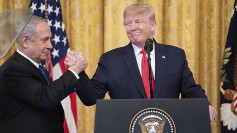
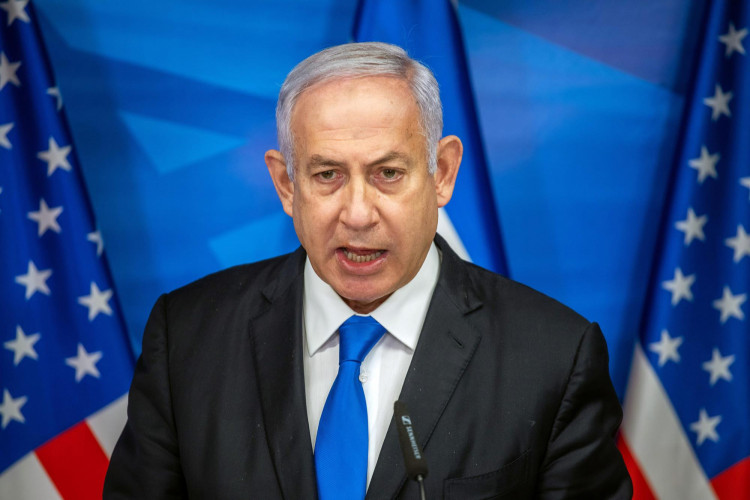
The diplomatic breakthrough emerged after a tense period in U.S.-Israeli relations. President Donald Trump publicly acknowledged this week that he confronted Israeli Prime Minister Benjamin Netanyahu over plans for expanded military operations in Lebanon, particularly around Beirut's southern suburbs, an area widely viewed as a Hezbollah stronghold.
Appearing on the New York Post's "Pod Force One" podcast, Trump confirmed reports that he had sharply criticized Netanyahu during a recent phone conversation.
"I did," Trump said when asked whether he had called Netanyahu "crazy." He added, "I wouldn't say angry. I was a little bit perturbed at his constantly fighting with Lebanon, you know."
According to reports cited by Axios, the conversation took place amid growing concern that escalating Israeli operations could derail wider regional diplomacy, including talks involving Iran. One U.S. official familiar with the discussion described Trump's message to Netanyahu in unusually blunt terms.
"You're f--king crazy. You'd be in prison if it weren't for me. I'm saving your ass. Everybody hates you now. Everybody hates Israel because of this," the official said.
Another official told reporters that Trump became visibly frustrated during the exchange and at one point shouted, "what the f--k are you doing?" at the Israeli leader.
Shortly afterward, Trump publicly sought to reassure markets and regional partners that the situation had been stabilized. Writing about his conversation with Netanyahu, the president described it as "very productive."
He also said that "there will be no Troops going to Beirut, and any Troops that are on their way, have already been turned back."