Iran announced a suspension of military operations against Israel on Monday, signaling a potential de-escalation in one of the most dangerous regional confrontations in recent months, even as both sides exchanged strikes over the weekend and Israeli forces continued operations inside Iran.
The announcement came hours after President Donald Trump declared that Israel and Iran were seeking an immediate ceasefire, raising hopes that diplomatic efforts could prevent a broader conflict involving Tehran's regional allies and Israel's military campaign.
In a statement carried by Iran's semiofficial Tasnim news agency, Tehran's Khatam al-Anbiya Central Headquarters said the "suspension of Armed Forces operations is announced" following what it described as a successful military response against Israel.
Iranian military officials framed the operation as retaliation for Israeli strikes targeting areas linked to Hezbollah in Lebanon. The statement said Iran had delivered a "painful response to the regime in support of the oppressed people of Lebanon."
Tehran also warned that the pause should not be interpreted as a permanent end to hostilities.
"If aggressions and hostile actions continue, including in southern Lebanon, far more severe and crushing measures than before will follow," the military command said.
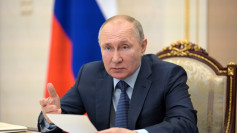
The development followed a message posted by Trump on social media in which the president suggested negotiations were progressing toward a broader settlement.
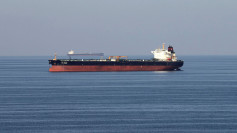
"Final negotiations on 'Peace' are proceeding, subject to ignorance or stupidity getting in its way. The Blockade will remain in place, and in full force and effect, until a 'Final Deal' is reached. Things should move quickly," Trump wrote.
The diplomatic effort emerged after a sharp escalation on Sunday. Israeli forces launched strikes against what the Israel Defense Forces described as a Hezbollah command center in Beirut's Dahieh district, a suburb widely viewed as a stronghold of the Iranian-backed militant organization.
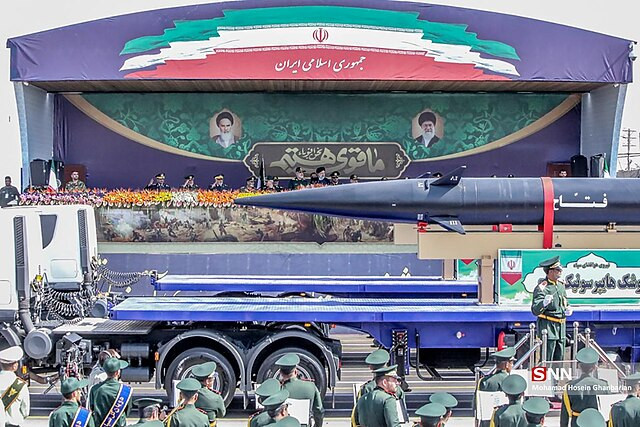
Iran responded by launching ballistic missiles toward Israel, linking its actions to what it considers a unified regional front involving both Lebanon and Iran. The exchange marked one of the most direct confrontations between the two countries since tensions intensified earlier this year.
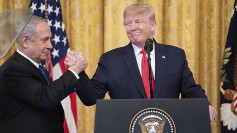
Despite Trump's public appeal for restraint, military activity continued. The president reportedly urged Israeli Prime Minister Benjamin Netanyahu not to retaliate further in order to preserve space for negotiations. Within hours, however, Israel launched another round of operations.
The Israel Defense Forces said it carried out "extensive" strikes targeting Iranian military infrastructure.
"Recently, defense systems were deployed in numerous areas across Iran as part of the regime's efforts to restore its detection and defense capabilities, which were degraded during Operation Roaring Lion," the IDF said.
Iranian media reported explosions in several cities, including Tehran, Karaj, Isfahan, Tabriz and Kermanshah. The strikes appeared focused on military and air-defense assets as Israel sought to limit Iran's ability to respond.
Iran subsequently launched additional missile attacks, while Yemen's Houthi movement, another Iranian-aligned force, fired two missiles in support of Tehran. Israeli authorities reported no casualties from the attacks.
According to Israeli military figures, Iran launched a total of 24 ballistic missiles beginning Sunday night. Israeli air defenses intercepted many of the projectiles, while others landed in open areas without causing significant damage.