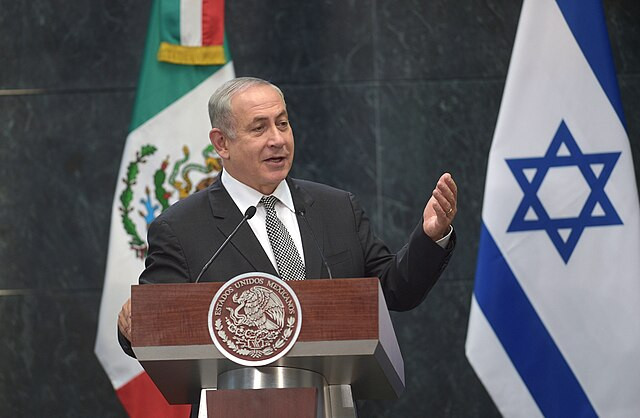
Israeli Prime Minister Benjamin Netanyahu said Monday that Israel is suspending its latest military campaign against Iran after days of escalating cross-border strikes, while warning that any renewed attack from Tehran would trigger an immediate and forceful response.
The announcement came within hours of Iran declaring a halt to its own military operations, raising cautious hopes that a rapidly intensifying confrontation between two of the Middle East's most powerful rivals may be entering a temporary pause. Both governments, however, paired their statements with warnings that the ceasefire-like conditions could quickly unravel.
Speaking in a public statement, Netanyahu said Israel had achieved its immediate objectives following Iranian attacks and subsequent Israeli retaliation.
"After Iran attacked Israel," Netanyahu said, "I directed the IDF to strike military and economic targets throughout Iran."
He added that "the fire on this front has been halted, because after the terrorist regime in Tehran was struck, it stopped attacking us," while making clear that Israel considers the pause conditional rather than permanent.
"If that terrorist regime makes the mistake of attacking us again, we will respond with force," Netanyahu said.
The remarks followed a statement from Iran's Khatam al-Anbiya Central Headquarters, which announced that the "suspension of Armed Forces operations is announced" after a weekend exchange of missile and air strikes that threatened to widen the regional conflict.
Iranian officials framed their military actions as retaliation for Israeli operations targeting areas linked to Hezbollah in Lebanon. According to the statement carried by the semi-official Tasnim news agency, Tehran claimed it had "delivered a painful response to the regime in support of the oppressed people of Lebanon."
The Iranian military command further warned that "If aggressions and hostile actions continue, including in southern Lebanon, far more severe and crushing measures than before will follow."
The exchange marked one of the most direct military confrontations between Israel and Iran in recent months. Hostilities intensified after Israeli strikes targeted what Israeli officials described as Hezbollah infrastructure in Beirut's southern suburbs, an area widely considered a stronghold of the Iran-backed group.
Iran subsequently launched missile attacks against Israel, arguing that developments in Lebanon and Israel could not be separated. Israeli officials responded with a series of airstrikes against military and strategic targets inside Iran.
Netanyahu used Monday's statement not only to address the latest fighting but also to reinforce his broader assessment of the regional balance of power.
"Today, Iran and Hezbollah are weaker than ever, and we are stronger than ever. But our struggle against them is not yet over," he said.
The Israeli leader also rejected any suggestion that Israel would tolerate future attacks from either Iran or its regional allies.
"Iran and Hezbollah tried to impose a new equation" on Israel, Netanyahu said, describing such a scenario as "intolerable and completely unacceptable."
"They thought they could launch attacks from Lebanon and Iran against Israel and that we would not act. That did not happen, and it will not happen. Not on my watch."
The latest developments unfolded against the backdrop of diplomatic efforts led by President Donald Trump, who publicly called for an immediate ceasefire between Israel and Iran. Trump wrote Sunday that both sides were "looking to do an immediate CEASEFIRE" and said "Final negotiations on 'Peace' are proceeding."
Netanyahu appeared to reference discussions with Washington while emphasizing Israel's independence in security matters.
"Israel has every right to self-defense, and we will exercise that right whenever necessary," he said. "I say this to you, dear citizens of Israel, just as I say it in my good conversations with my friend President Trump."