Elon Musk's wealth crossed a historic threshold Friday after SpaceX made its long-awaited public market debut, propelling the entrepreneur to an estimated trillion-dollar fortune and immediately reigniting a political battle over wealth, taxation and economic inequality.
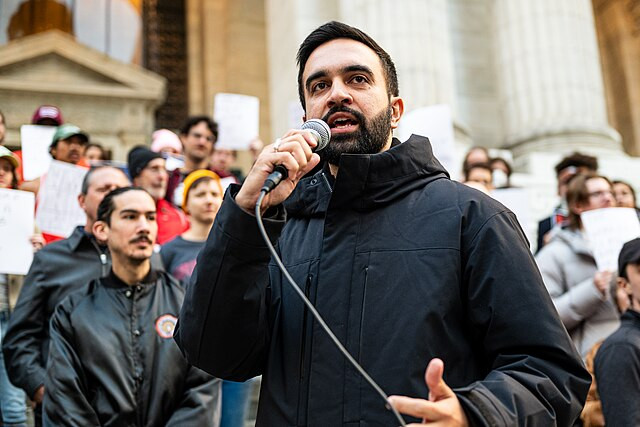
The milestone quickly drew a response from New York City Mayor Zohran Mamdani, who used social media to renew his call for higher taxes on the wealthy. The exchange transformed what might have been remembered solely as a landmark financial event into a broader debate over how governments should respond to the growing concentration of wealth among technology executives.
SpaceX shares opened at $135 and climbed to roughly $150 during early trading, according to reports, dramatically increasing the value of Musk's controlling stake in the company. The rally widened the gap between Musk and other members of the global billionaire class, strengthening his position atop the world's wealth rankings.
The scale of that lead is striking. Figures cited in the reporting placed several of Musk's closest rivals well below the trillion-dollar mark:
- Larry Page: $294.1 billion
- Sergey Brin: $271.3 billion
- Jeff Bezos: $248.9 billion
The unprecedented valuation immediately became political ammunition for Mamdani, who has built much of his economic platform around taxing high-net-worth individuals and luxury assets. For the mayor, the emergence of a trillionaire served as evidence that existing tax structures allow enormous fortunes to expand faster than public resources.
The clash also carries a personal dimension. During New York's mayoral race, Musk publicly supported former New York Governor Andrew Cuomo rather than Mamdani. Since then, the two have represented sharply different visions of economic policy, with Musk championing efficiency, innovation and private-sector growth, while Mamdani has emphasized redistribution and expanded public investment.
Yet the dispute extends beyond tax policy. In recent months, Mamdani has attempted to position himself as a reformer focused on government efficiency through the creation of the Commission on Government Efficiency, known as COGE. The initiative drew comparisons to Musk's own efforts to streamline operations in both business and government.
At a May 28 press conference, Mamdani described the mission in practical rather than ideological terms.
"We are delivering on something New Yorkers - and frankly many Americans - care about," he said. "What we are speaking about is a sincere fulfillment of a vision that ensures that city government is operating with the same focus that a working-class New Yorker is when they're trying to balance their bills."
The SpaceX debut also highlighted the growing influence of aerospace and defense-related technology companies in financial markets. Unlike Tesla, which built its reputation around electric vehicles, SpaceX has become central to satellite communications, commercial launches and government space contracts, making its valuation increasingly significant beyond Silicon Valley.
Questions remain about how durable Musk's trillion-dollar status will prove to be. Much of his fortune is tied to stock valuations that can fluctuate sharply, particularly in the days and weeks following a major public offering. Analysts note that rapid gains after an IPO are not always permanent, and future trading could significantly alter the size of Musk's net worth.
The political response has extended beyond City Hall. Amazon founder Jeff Bezos entered the discussion after Mamdani promoted government-efficiency initiatives. According to CNBC, Bezos argued that savings generated through efficiency efforts should be returned to taxpayers rather than used to expand government programs.
"With some of the savings, we can zero out taxes on the bottom half of earners," Bezos wrote on X. "The best way to put money in people's pockets is not to take it out in the first place."