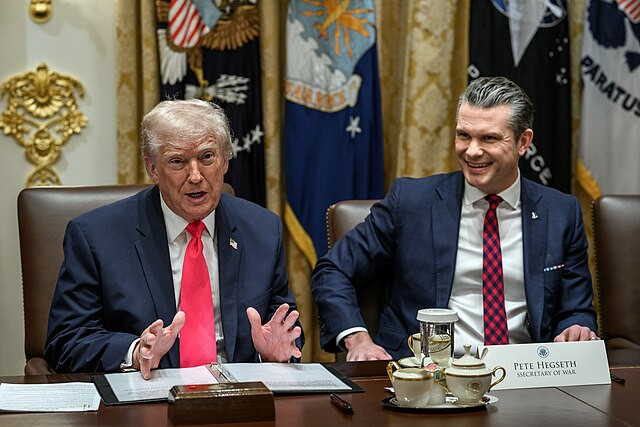
President Donald Trump's push to secure a landmark agreement with Iran is exposing some of the deepest divisions inside his national security team, with reports indicating that senior administration officials who opposed the deal could face political consequences as the White House moves to defend one of the most significant foreign policy initiatives of Trump's second term.
At the center of the dispute are Defense Secretary Pete Hegseth and CIA Director John Ratcliffe, both of whom reportedly expressed skepticism about the agreement negotiated between Washington and Tehran. According to Israel Hayom, Trump has considered removing officials who opposed the arrangement, which aims to end months of conflict, reopen the Strait of Hormuz and launch a new phase of negotiations over Iran's nuclear program.
A senior U.S. official quoted by Israel Hayom described the atmosphere inside the administration bluntly: "The debate has been settled. Anyone who opposed it could pay a personal price."
The reported tensions underscore the stakes surrounding a deal that Trump has framed as a major diplomatic breakthrough. Announcing the agreement, the president wrote on social media: "The Deal with the Islamic Republic of Iran is now complete. Congratulations to all!"
The preliminary framework includes several key components:
- A 60-day extension of the ceasefire between the United States and Iran
- The reopening of the Strait of Hormuz to commercial shipping
- Potential sanctions relief and access to certain frozen Iranian assets
- New negotiations focused on restrictions related to Iran's nuclear activities
Pakistani Prime Minister Shehbaz Sharif, whose government played a mediation role during the talks, has said a formal signing ceremony is expected to take place in Switzerland.
The reported internal disagreement centers on whether Iran can be trusted to uphold its commitments. According to Israel Hayom and Israeli Channel 12, Hegseth, Ratcliffe and other officials argued that Tehran remained under substantial economic pressure and that maintaining sanctions could produce stronger concessions in future negotiations.
Several reports indicate that Secretary of State Marco Rubio also questioned whether Iran would fully comply with the agreement. However, unlike other officials, Rubio has largely avoided publicly criticizing the framework, helping him avoid becoming a focal point in the administration's internal dispute.
The opposing camp reportedly included Vice President JD Vance, special envoy Steve Witkoff and Jared Kushner, who were closely involved in shaping the negotiations. According to Israel Hayom, they argued that continued conflict offered limited strategic benefits and that diplomatic engagement presented the best path toward stabilizing the region and restoring commercial activity through the Gulf.
Intelligence assessments reportedly raised questions about Iran's intentions, while lawmakers and foreign allies have sought greater clarity regarding the agreement's enforcement mechanisms and the sequence of sanctions relief.
One issue drawing particular scrutiny is whether Tehran will make meaningful nuclear concessions before receiving economic benefits. Critics have argued that lifting sanctions too quickly could reduce U.S. leverage, while supporters contend that phased relief is necessary to sustain negotiations and secure long-term compliance.
Treasury Secretary Scott Bessent reportedly urged caution during internal discussions, warning that sanctions, once removed, could prove difficult to restore. Although some adjustments were reportedly made to the framework, the overall direction of the agreement remained intact.
The White House has strongly pushed back against reports suggesting personnel changes are imminent. White House spokeswoman Anna Kelly dismissed the Israel Hayom report, saying: "I have never heard of this reporter until he started consistently pushing fake news without reaching out to the White House for comment," and adding that the reporter's sources were "probably the voices in his head."