Vice President JD Vance delivered some of the Trump administration's sharpest public criticism yet of Israeli opposition to the U.S.-Iran memorandum of understanding, warning Israeli officials that Washington remains their most important ally as disagreements over the agreement's terms continue to escalate.
The dispute centers on the Trump administration's effort to end hostilities with Iran, reopen the Strait of Hormuz and advance a broader regional ceasefire. While President Donald Trump has portrayed the agreement as a pathway toward stability and lower energy prices, several Israeli politicians have openly questioned its merits, particularly provisions tied to Lebanon and the future of Hezbollah.
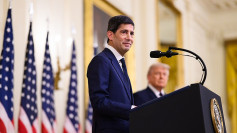
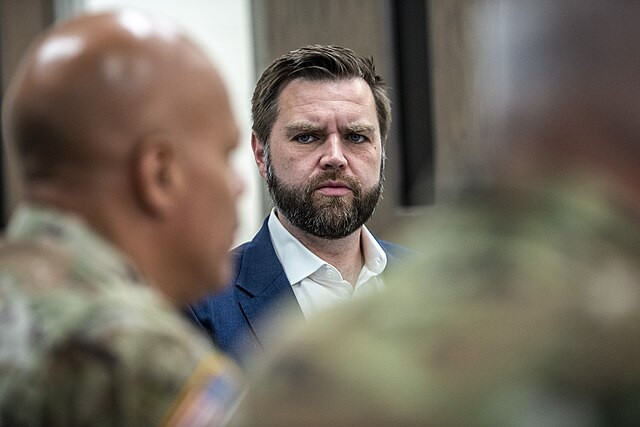
Speaking during a White House press briefing, Vance appeared to respond directly to criticism from Israeli Finance Minister Bezalel Smotrich and National Security Minister Itamar Ben Gvir.
"If I was in the cabinet of the Israeli government, I might not be attacking the only powerful ally that I have left," Vance said.
He went further, framing the criticism as a misunderstanding of Israel's strategic position.
"The problem for Israel is not Donald J. Trump, and anybody in Israel who thinks their biggest problem is the President of the United States needs to wake up and smell the reality of the situation that country is in," Vance added.
The vice president echoed similar arguments in comments to The New York Times, defending both the agreement and the administration's broader Middle East strategy.
"We've done a very good job by that particular country and that particular government, and I think that the idea that we've made a terrible deal is not supported by the facts, but just doesn't make any sense if you consider the broad length of the relationship," Vance said.
The administration has argued that the memorandum creates an opportunity to reduce regional tensions after months of conflict that disrupted energy markets, threatened global shipping routes and increased fears of a wider war involving Iran, Israel and Hezbollah.
Vance also challenged critics who favor a more military-focused approach toward regional security.
"I guess my response to them would be: What is your exact proposal? You're a country of nine million people. You can't just kill your way out of solving every single national security problem that you have," he said.
At the center of the disagreement is Lebanon. Iranian officials have argued that the agreement requires an end to hostilities across multiple fronts, including fighting involving Hezbollah. Israeli leaders, however, have signaled little willingness to alter their security posture along the northern border.
Prime Minister Benjamin Netanyahu reinforced that position on Thursday, saying Israeli troops would remain in southern Lebanon as long as military commanders believe the deployment is necessary.
Speaking at a public ceremony, Netanyahu said restoring "security and prosperity to northern towns" requires "maintaining the security zone in southern Lebanon; it requires that we not leave there, as long as Israel's security needs require it."
The comments reflected concerns inside Israel that a premature withdrawal could expose northern communities to renewed attacks. Tens of thousands of residents have been displaced during the conflict with Hezbollah, making border security a politically sensitive issue for Netanyahu's government.
A senior Israeli official told Reuters that Israel is "conducting stubborn negotiations" regarding Lebanon-related aspects of the diplomatic framework. Meanwhile, the Israel Defense Forces published an updated map of its security zone, signaling that no immediate withdrawal is planned.
President Trump has sought to project confidence that the agreement can withstand growing criticism from both regional rivals and domestic political opponents.
In a social media post, Trump wrote that the "United States is committed to PEACE, and we encourage everyone in the Middle East Region to maintain their commitment to allowing our negotiations to beautifully unfold."
Trump also linked the agreement to economic benefits, pointing to declining oil prices and improving market sentiment following the announcement.
"The Markets are loving what is happening with Oil Prices way down, and Stocks way up. We expect a complete Ceasefire on all fronts, including Lebanon, Hezbollah, and Israel," Trump said.