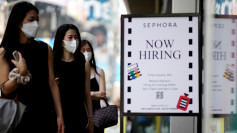
The U.S. labor market lost momentum in June as employers added just 57,000 nonfarm jobs-less than half the number economists had expected-even as the unemployment rate edged lower, underscoring a labor market that is cooling without yet showing signs of a broad collapse.
The latest report from the U.S. Bureau of Labor Statistics showed payroll growth fell well short of the Dow Jones consensus forecast of 115,000 jobs. At the same time, the unemployment rate declined to 4.2%, a result that appeared stronger on the surface but was largely driven by fewer Americans participating in the workforce rather than a surge in hiring.
The June figures arrive as investors, policymakers and businesses continue to assess whether the labor market is slowing enough to influence future Federal Reserve policy. While unemployment remains historically low, several recent indicators-including private-sector hiring, layoffs and worker confidence-have pointed to a more cautious employment environment.
A key factor behind June's lower unemployment rate was a decline in labor force participation. CNBC reported that the participation rate fell 0.3 percentage points to 61.5%, its lowest level since March 2021, suggesting fewer Americans were either working or actively seeking employment.
The composition of hiring also reflected uneven conditions across industries. Professional and business services led job creation with 36,000 new positions, while social assistance added 25,000 jobs and healthcare contributed another 22,000.
Other sectors moved in the opposite direction. Leisure and hospitality lost 61,000 positions, with the Bureau of Labor Statistics attributing much of the decline to weaker-than-normal seasonal hiring despite the World Cup generating additional economic activity in parts of the country.
Private-sector payroll data released one day earlier by ADP painted a similar picture of moderating employment growth.
ADP reported that private employers added 98,000 jobs in June after seasonal adjustments, below economists' expectations of 110,000. Nearly half of those gains came from education and health services, while only about 2,000 new positions were created outside the broader services sector.
ADP Chief Economist Nela Richardson said the hiring slowdown reflects both employer caution and labor supply challenges.
"The pace of hiring is telling a story of both supply and demand. We know it's taking people longer to find work, but there also are signs of labor supply constraints in certain industries," Richardson said.
"For now, the overall effect is a slowdown in job creation."
Hiring also varied considerably by company size.
- Businesses with fewer than 50 employees added 53,000 jobs.
- Companies with 50 to 499 workers hired 29,000 employees.
- Employers with 500 or more workers added 25,000 positions.
The softer hiring data follows another sign that employers are becoming more selective. According to Challenger, Gray & Christmas, U.S. companies announced more than 97,000 planned job cuts in May, the highest total for that month since the early months of the COVID-19 pandemic. Approximately 40% of those announcements cited artificial intelligence as a contributing factor.
Some labor market analysts, however, caution that AI is not always the primary reason behind workforce reductions.
Chris Hutchins, founder and chief executive of Hutchins Data Strategy Consultants, told Moneywise that jobs centered on repetitive, pattern-based work are naturally more susceptible to automation. But he added that when companies attribute layoffs in other occupations to artificial intelligence, "the underlying cause is likely something other than AI."
Concerns about long-term employment security continue to grow even as unemployment remains relatively low. ADP's Today at Work 2026 report found that only 22% of workers worldwide strongly believe their jobs are safe from elimination, suggesting that more than three-quarters of employees harbor concerns about future job stability.
Taken together, the June payroll report, weaker private hiring figures and rising anxiety about automation point to a labor market that is gradually losing momentum rather than entering a sudden downturn. While employers continue to add jobs, the pace has slowed considerably, hiring has become more concentrated in a handful of industries, and a shrinking labor force is increasingly influencing headline unemployment figures that otherwise appear stronger than the underlying employment trends suggest.