Ukraine's air defense network came under mounting pressure after a large-scale Russian missile and drone assault killed at least 12 people in the Kyiv region, highlighting Kyiv's growing shortage of U.S.-made Patriot interceptors as President Volodymyr Zelensky appealed to NATO allies for additional military support ahead of this week's summit.
According to Reuters, Ukrainian Air Force data showed that Russia launched 23 ballistic missiles during the latest attack, and none were intercepted. Ukrainian forces were more successful against other incoming weapons, shooting down 37 cruise and other missiles as well as more than 90% of over 350 drones launched during the assault. The figures underscored the increasing challenge Ukraine faces in defending against ballistic missile strikes, which require advanced air-defense systems such as the U.S.-made Patriot.
The latest barrage has intensified concerns over Ukraine's diminishing stockpile of interceptors, an issue Zelensky has repeatedly raised with Western allies. The Ukrainian leader is expected to make air defense one of his central priorities during the NATO summit in Ankara, arguing that additional missile interceptors are essential to protecting civilians and critical infrastructure from escalating Russian attacks.
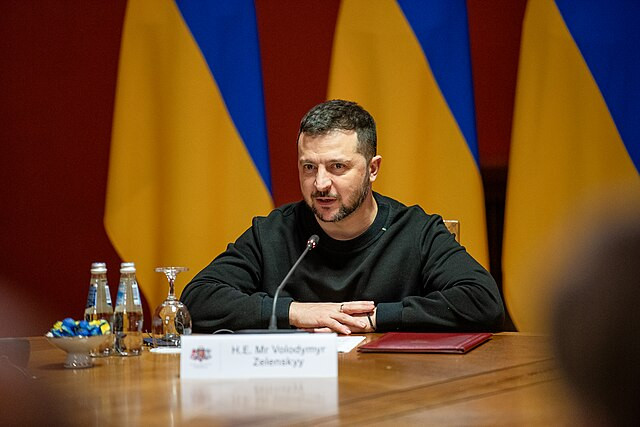
"As long as Patriot missiles remain in our allies' stockpiles, Russia is only encouraged to keep 'vanquishing' residential buildings. The United States and Europe have enough strength to stop this terror," Zelensky wrote in a social media post.
He also urged allies to take concrete action during the upcoming alliance meeting.
"It is critically important that the world - first and foremost the United States and our European partners - come out of the NATO Summit in Ankara with strong decisions in support of our air defense, and thus the protection of ordinary people's lives," Zelensky added.
The latest strike reflects a broader shift in Russia's aerial campaign, which has increasingly relied on combining large drone swarms with ballistic and cruise missiles to overwhelm Ukrainian defenses. While Ukraine has demonstrated a high interception rate against drones and slower-moving missiles, ballistic weapons remain significantly more difficult to defeat without sufficient numbers of advanced interceptors.
At the same time, Ukraine has expanded its own long-range campaign against Russian territory, focusing on energy infrastructure that Kyiv argues supports Moscow's military operations.
Recent Ukrainian drone strikes targeted the St. Petersburg Oil Terminal and facilities in Russia's Leningrad region on July 4. Earlier operations struck energy sites in Yaroslavl, Tuapse and Krasnodar Krai, continuing a strategy aimed at disrupting fuel production, storage and exports.
Ukrainian officials argue that oil facilities constitute legitimate military-related targets because energy revenues help finance Russia's war effort. By repeatedly attacking refineries and export terminals, Kyiv hopes to increase the economic costs of the conflict while exposing vulnerabilities inside Russia's domestic infrastructure.
The campaign appears to be producing measurable effects.
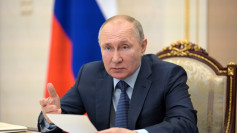
Russian President Vladimir Putin acknowledged on June 28 that fuel shortages had become a concern in some regions, signaling that repeated strikes have complicated fuel distribution in parts of the country. Reports from affected areas have described temporary shutdowns at energy facilities, supply bottlenecks and longer lines at gasoline stations as authorities work to stabilize local markets.
The battlefield developments come as new estimates suggest the war continues to exact an enormous human cost on both sides.
CNN reported last week that a new study estimated Russia's total casualties have surpassed 1.4 million, including roughly 450,000 deaths. The study, conducted by Seth G. Jones and Riley McCabe, also estimated that Ukraine has suffered more than half a million casualties since Russia launched its full-scale invasion.
"Russian fatalities in Ukraine are more than four times greater than all US fatalities in all wars combined since World War II, and more than nine times greater than all Soviet and Russian fatalities in all wars combined since World War II," Jones and McCabe wrote in their analysis.