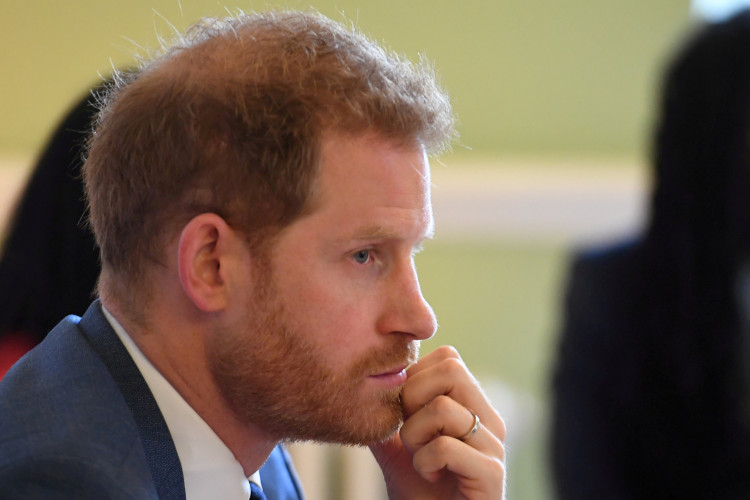
Prince Harry's planned return to the United Kingdom has reignited debate over his long-running security dispute with British authorities, while fresh reports claiming Prince William is prepared to confront King Charles III over the visit remain unsupported by official evidence.
The latest speculation emerged as the Duke and Duchess of Sussex continue evaluating whether Meghan Markle, Prince Archie and Princess Lilibet will accompany Harry to Britain later this month. Although reports have suggested new tensions within the royal family, no public statement from Buckingham Palace, Kensington Palace or Prince William has confirmed claims that the heir to the throne has threatened any action against the King.
Instead, the most firmly established aspect of the story remains Harry's ongoing disagreement with the British government over police protection, an issue that has dominated discussions surrounding nearly every UK visit since he and Meghan stepped back from royal duties in 2020.
Representatives for the Sussexes have maintained that security-not accommodation or scheduling-is the principal obstacle.
According to Harry's team, the Duke is "exploring every available option" to ensure the visit can proceed while guaranteeing appropriate protection for his family. Representatives have emphasized that the central issue is whether "appropriate and proportionate protective security" will be available throughout the visit rather than where the family stays.
British government officials have declined to discuss operational security arrangements, citing longstanding policy against revealing protective measures that could compromise public safety.
The security dispute has been the subject of several legal challenges.
After relinquishing his status as a working royal, Harry lost automatic access to taxpayer-funded police protection during visits to Britain. He subsequently challenged those arrangements in court, arguing that the existing framework does not provide sufficient protection for him and his family while they are in the UK.
British authorities have consistently maintained that security decisions are made through individual risk assessments rather than automatic entitlement.
Government representatives have repeatedly described the protective system as "rigorous and proportionate," while declining to comment on specific arrangements involving members of the royal family.
Alongside the established security dispute, recent reports have claimed Prince William could strongly oppose any move perceived as giving Harry preferential treatment during his return.
Those claims, however, remain based on unnamed sources and have not been independently verified.
Neither Buckingham Palace nor Kensington Palace has publicly addressed suggestions that William has threatened to take action if King Charles becomes more accommodating toward his younger son.
Without official confirmation, the reports remain speculative rather than established fact.
The latest speculation has nevertheless drawn attention because it reflects the widely reported deterioration in the relationship between the two brothers.
Royal commentator Roya Nikkhah said in April that William "does hold a grudge" and "does choose sides," adding that if "someone picks the other side, he remembers that."
Separately, journalist Rob Shuter cited an unnamed source in his Substack newsletter claiming of William: "He doesn't forget, and he doesn't forgive easily."
Neither observation confirms any new disagreement surrounding Harry's upcoming visit. Instead, they reflect opinions expressed by commentators about William's personality and longstanding relationship with his brother.
The official record surrounding Harry's security dispute remains considerably clearer than speculation surrounding family dynamics.
Harry has previously argued through legal proceedings that Britain remains his home and that he wants his children to maintain a connection with the country. His legal team has repeatedly contended that current security arrangements leave him unable to visit safely with Meghan and their children.
British courts, however, have upheld the government's case-by-case approach to determining protective security for the Duke during visits.
That framework remains in place today.
The renewed attention also underscores the continuing challenge facing King Charles.
Although some reports portray the monarch as caught between his two sons, constitutional convention prevents the King from directing operational decisions made by the Home Office or security agencies. Any intervention in those matters would risk drawing the monarch into political decision-making, something the Crown traditionally avoids.
As a result, the King occupies a limited constitutional role despite the deeply personal nature of the family dispute.
Harry has consistently expressed a desire for his children to spend time in Britain and maintain relationships with members of the royal family. At the same time, his representatives have continued to argue that those visits cannot occur unless security concerns are adequately addressed.