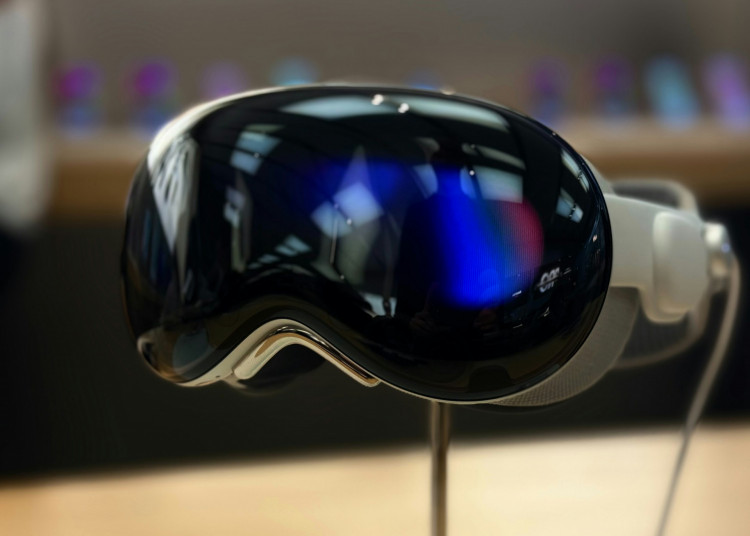
Apple has laid off at least 60 employees connected to its Vision organization, according to AppleInsider, the latest sign that the iPhone maker is scaling back its near-term ambitions for the Vision Pro headset while directing more resources toward generative artificial intelligence, Siri and smart glasses.
The reductions affected employees in the Apple Vision Group, Vision Products Group and related positions, AppleInsider reported, citing a source familiar with the cuts. Apple hasn't publicly commented on the layoffs, and the reductions don't amount to the elimination of Apple's spatial-computing operation.
Still, the cuts extend a series of personnel and product changes that have steadily reduced the prominence of Vision Pro inside Apple. The company continues to sell its M5-powered Vision Pro and develop visionOS, but active development of next-generation Vision Pro hardware was stopped earlier this year, according to previous reports.
The retrenchment represents a significant shift for a product Apple once positioned as the beginning of a new computing platform. Vision Pro entered the market as an ambitious attempt to blend digital applications with users' physical surroundings, but its high price and relatively narrow consumer market made widespread adoption a longer-term proposition.
Changes inside the organization began well before the latest layoffs. Dan Riccio, the longtime Apple executive who oversaw the company's mixed-reality push, retired in October 2024. Responsibility for the hardware organization subsequently moved under John Ternus, Apple's senior hardware executive.
A more consequential reorganization followed in March 2025. Apple moved Mike Rockwell, one of the principal architects behind Vision Pro, into a central role overseeing efforts to overhaul Siri, according to Bloomberg's Mark Gurman.
The transfer reflected Apple's growing urgency around artificial intelligence. Chief Executive Tim Cook had reportedly lost confidence in AI chief John Giannandrea's ability to deliver the Siri improvements the company needed, putting Rockwell at the center of an effort increasingly critical to Apple's competitive position.
Rockwell didn't entirely leave spatial computing behind. He continued overseeing visionOS while taking on Siri responsibilities and moved into the organization led by software chief Craig Federighi, linking Apple's Vision software more closely with its broader software-development operation.
The restructuring accelerated in April 2026 when Apple stopped active development of next-generation Vision Pro hardware, according to multiple reports. Rockwell's visionOS teams moved with him into Federighi's organization, while Paul Meade, who leads hardware engineering for the Vision Products Group, remained responsible for a smaller hardware team.
Those engineers have focused largely on maintaining the existing M5 Vision Pro and advancing Apple's smart-glasses initiative, known internally as N50. That project could give Apple another route into wearable computing without requiring consumers to adopt a comparatively large and expensive mixed-reality headset.
The strategic shift also highlights how generative AI has reshaped spending priorities across the technology industry. Apple is under pressure to strengthen Siri and integrate more sophisticated AI capabilities across the iPhone, Mac and its other devices as rivals push increasingly capable AI assistants and models into their platforms.
For Vision Pro, the result appears to be a transition from an aggressively expanding hardware category into a longer-duration technology program. AppleInsider reported that the latest layoffs don't mean Apple is abandoning spatial computing, while continued visionOS development indicates that the underlying platform remains active.
Questions also remain about the leadership of the operation. Gurman's previous reporting said Rockwell has considered eventually moving into an advisory position or leaving Apple, although such a change isn't expected before the Siri overhaul planned around iOS 27.
Apple marketing chief Greg Joswiak addressed the uncertainty surrounding the product category in April, describing Vision Pro as a glimpse of where computing could eventually move while acknowledging the difficulty of predicting when spatial computing might reach a broader audience.