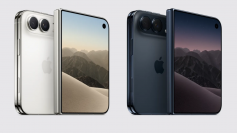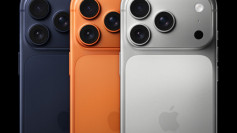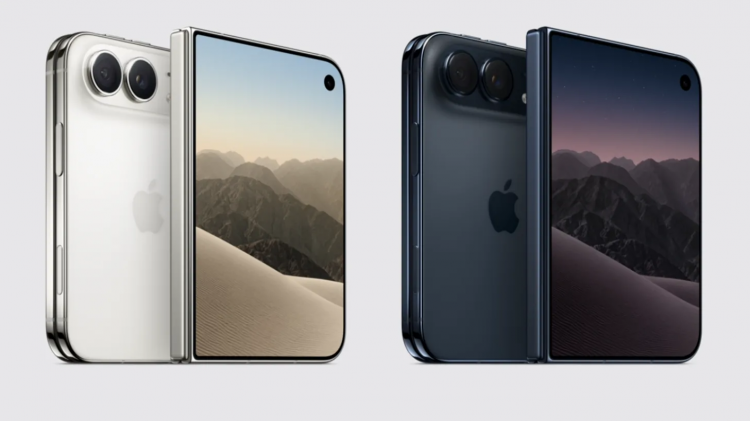
Apple unveiled its first foldable iPhone on Wednesday, introducing the $1,999 iPhone Duo alongside the iPhone 18 Pro and Pro Max in the first major product event led by newly installed Chief Executive John Ternus. The company also surprised developers and photographers by bringing variable-aperture cameras to both Pro models and introducing a new Reference Image system designed to authenticate photographs in an era of widespread AI manipulation.
Ternus, who became Apple CEO on Sept. 1, opened the "Surprise and Shine" event at Steve Jobs Theater with a privacy-focused argument for Apple's approach to artificial intelligence. Rather than beginning with new hardware, he emphasized on-device processing and Private Cloud Compute as the foundation of Apple Intelligence.
According to TechCrunch's account of the keynote, Ternus contrasted Apple's approach with companies that treat personal information as something to collect and retain. He said Apple Intelligence processes data on the device whenever possible and extends those protections into the cloud when more computing power is required.
The iPhone Duo was saved for the end of the presentation. Apple's first book-style foldable opens to a 7.6-inch Super Retina XDR display with ProMotion and an anti-crease coating, while a 5.4-inch outer screen provides roughly 90% of the viewing area of an iPhone 18 Pro display.
Both screens can reach 3,000 nits of outdoor brightness, according to Apple's announcement. The device uses grade-5 titanium, a 3D-printed titanium hinge cover and Ceramic Shield 2 on the exterior screen, while Apple says the phone also carries an IP68 water-resistance rating.
Inside, the Duo uses Apple's A20 Pro processor and C2 modem, the same core silicon platform found in the iPhone 18 Pro lineup. Storage options range from 256GB to 2TB, with Night Sky and Star White as the two launch colors.
Apple rates battery life at 24 hours when both screens are used in roughly equal proportions, 31 hours when primarily using the larger inner panel and 44 hours when relying on the outer screen. Fast charging can bring the battery to about 50% in 20 minutes, according to the company.
The foldable format also allows Apple to use the external screen for photography and video features unavailable on conventional iPhones. Duo Preview gives subjects a live view of the frame, while Kid Cue plays animations intended to draw children's attention toward the camera. Smart Take can monitor a group and automatically capture an image when subjects appear ready.
Apple said the Duo will gain support for the USB-C Apple Pencil through a software update later this year, potentially putting the device in competition with smaller iPads for users who want one device for both phone and tablet functions.
Preorders for the Duo open Oct. 16, with retail availability beginning Oct. 23. The $1,999 starting price puts the device between Google's $1,899 Pixel 11 Pro Fold and Samsung's $2,099 Galaxy Z Fold 8 Ultra, based on the pricing provided in the source material.
The iPhone 18 Pro and Pro Max introduce another major hardware transition through the A20 Pro, Apple's first smartphone processor manufactured using TSMC's 2-nanometer N2 process. The architecture moves from the FinFET transistor design Apple has used for years to gate-all-around nanosheets, which wrap the transistor gate around the channel more completely to improve efficiency at increasingly small dimensions.
TSMC has said its N2 process can provide roughly 10% to 15% more performance at comparable power or 25% to 30% lower power consumption at comparable performance than the 3-nanometer N3E process. For Apple, the efficiency gains are especially relevant as more AI processing moves onto the device.
The A20 Pro package also places the processor and 12GB of LPDDR5X memory closer together through wafer-level multi-chip packaging. Apple is betting that lower memory-access latency will help with AI inference workloads that require frequent movement of model data between memory and compute resources.
The biggest camera surprise was Apple's decision to put variable aperture on both the iPhone 18 Pro and Pro Max. Pre-event reporting had suggested the technology would be limited to the larger model.
Apple's mechanism uses six laser-cut polymer-composite blades and can automatically change the lens opening depending on lighting conditions. The company says the wider setting can gather roughly 50% more light than the fixed aperture used on earlier iPhones.
Four aperture positions can also be selected manually. Apple is opening access to the mechanism through a developer API, allowing third-party photography and video applications to control the hardware rather than relying solely on software-generated depth-of-field effects.
The Pro models also introduce Apple Reference Image, an opt-in system aimed at photojournalists, documentary photographers and other users who need to establish image provenance.
When Reference mode is enabled, the camera signs pixel-level sensor data at the moment of capture. Apple's Private Cloud Compute system then processes that information into what the company describes as an unalterable digital negative that appears alongside the finished photograph.
The system is designed to show whether a photo was altered after capture. Cropping, compositing, color changes or AI editing can be detected by comparing a later version against the signed reference file.
Reference Image doesn't establish that a photographed scene was authentic, unstaged or correctly described. A technically unaltered image could still depict a staged event or be paired with a misleading caption, meaning the system addresses file provenance rather than every form of photographic deception.
Apple is separately adopting Google DeepMind's SynthID system in iOS 27 for images created or edited with Apple Intelligence tools. The two technologies address different problems: Reference Image authenticates original camera capture, while SynthID marks AI-generated or AI-modified material.
Reference Image won't be available for capture in China or the European Union at launch, according to the source material. European users will still be able to view and process Reference Images captured elsewhere.
The iPhone 18 Pro starts at $1,199 for 256GB, while the Pro Max begins at $1,299, increases of $100 from the prior generation. The source material attributes much of that increase to sharply higher LPDDR5X memory costs as semiconductor producers divert more capacity toward high-bandwidth memory for AI data centers.
TechInsights estimates cited in the article put the cost of the Pro's 12GB memory package at about $145, compared with roughly $39 for the 8GB configuration used in the iPhone 17 Pro. TrendForce estimates memory now accounts for around 34% of the iPhone 18 Pro's component cost.
Apple also refreshed its wearable and audio lineup. Apple Watch Series 12 starts at $399 and introduces more frequent health-sensor sampling and a daily readiness score, while Apple Watch Ultra 4 remains $799 and extends standard battery life to as much as 50 hours.
AirPods 5 bring active noise cancellation to Apple's entry-level earbuds at $129, while a $149 version adds touch-sensitive volume controls. Apple says the new earbuds reduce noise 50% more effectively than AirPods 4.
iOS 27 will be released Sept. 14, with Apple's rebuilt Siri AI launching in English beta on devices with at least 12GB of unified memory. The company said server-based Siri AI features will eventually be subject to daily usage limits, with additional capacity potentially available through a paid tier.