President Donald Trump's renewed focus on the 2020 presidential election has drawn fresh criticism from author and longtime Trump biographer Michael Wolff, who argues the president's repeated claims about the election reflect a deeply held personal belief rather than a calculated political strategy. Speaking after Trump's latest primetime address, Wolff described the president's continued insistence that the 2020 election was stolen as evidence of what he characterized as "mental illness," while emphasizing that Trump appears genuinely convinced of his own assertions.
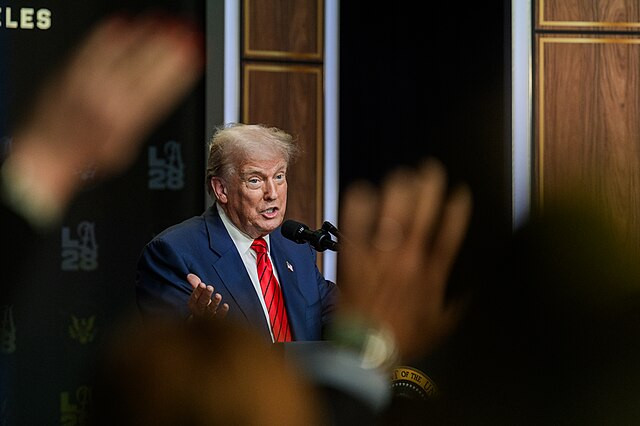
The comments came after Trump used a televised address on Thursday to argue that newly released documents demonstrated outside interference in his 2020 defeat to former President Joe Biden. News organizations that reviewed the materials subsequently reported that they did not substantiate Trump's claims. The renewed attention also arrives as Trump's efforts to advance election-related legislation face political hurdles, with the SAVE America Act remaining stalled in the Senate without sufficient support to pass.
Wolff, a veteran journalist and author known for his books chronicling Trump's presidency and political career, discussed the issue during an episode of The Daily Beast podcast, Inside Trump's Head, with co-host Joanna Coles. According to Wolff, Trump's continued emphasis on the 2020 election should not be viewed merely as political messaging.
"I think everyone around him understands, in fact, that he absolutely believes this," Wolff said. "No one else believes it. No one else believes that he won the 2020 election. But he does believe it."
Wolff argued that the president's persistence on the issue reflects something more deeply rooted than campaign rhetoric.
"There is mental illness here, and it's kind of a result of his paranoia, his resentments, his insecurity, his inability to appreciate reality, I think you might most accurately say," Wolff said.
Those remarks represent Wolff's personal opinion and are not supported by any official medical diagnosis or evaluation. Mental health professionals generally discourage diagnosing public figures without conducting a direct clinical examination.
During the podcast discussion, Coles questioned why Trump continues returning to the subject despite facing numerous legislative and political priorities. Wolff responded that he does not believe the president is making a strategic calculation.
According to Wolff, Trump continues advancing the election narrative because it remains central to his own thinking rather than because it offers a political advantage. He argued that many Republicans now see revisiting the 2020 election as politically counterproductive, yet Trump continues raising the issue regardless.
"Again, this is another description of why you have to see this as an illness, that he can't get away from this," Wolff said. "This does no good for him, and I think we've seen in the reaction of other Republicans, this is a political negative for him. And yet he pursues it because he can't not pursue it."
Wolff expanded on those views in a recent Substack post, describing personal conversations with Trump during which the president revisited his claims about the 2020 election. According to the author, Trump repeatedly walked through numerical arguments and allegations that Wolff believes have become fixed in the president's thinking.
"All his hurt on display," Wolff wrote. "It's an obsessive recitation of numbers that he's been told and then revised to his own specifications of strange things that happened."
The biographer also suggested Trump absorbs isolated pieces of information that reinforce his existing beliefs while rejecting contradictory evidence. Summarizing his assessment, Wolff concluded: "It's a kind of delirium."
Trump has consistently maintained that widespread fraud affected the 2020 election, despite courts across the country rejecting numerous legal challenges and election officials from both major political parties stating they found no evidence of fraud on a scale that would have altered the outcome. The president has continued to argue that new evidence supports his position, while critics contend that repeated reviews have failed to substantiate those claims.