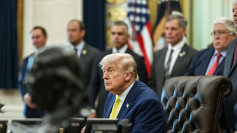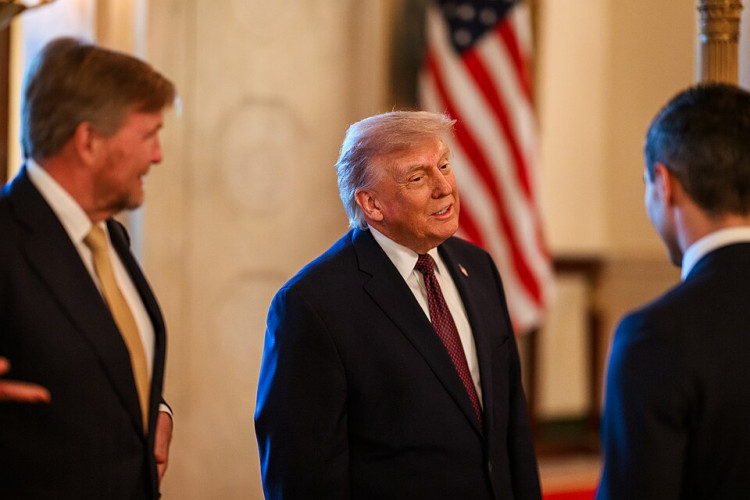
President Donald Trump renewed his criticism of wind power this week by describing a nationwide television blackout that fact-checkers say never occurred, prompting renewed scrutiny over what analysts describe as a recurring rhetorical pattern in which the president encourages audiences to recall events that did not happen. Speaking at an Environmental Protection Agency event in Washington, Trump used the anecdote to attack renewable energy, while CNN fact-checker Daniel Dale argued the story fits into a broader series of fabricated recollections involving Trump's political record and historical events.
The remarks centered on Trump's long-running opposition to wind energy. During the event, he claimed Americans had been unable to watch his June 2024 presidential debate against Joe Biden because wind turbines had stopped producing electricity. Addressing the audience, Trump said they should remember the incident as evidence that wind energy was unreliable.
Referring to what he called the "Green New Scam," Trump said Americans wanted to watch his debate against "Sleepy Joe Biden" but could not because there was no wind to generate electricity. "Remember that?" Trump asked the audience. He later added, "I got it right from the beginning," before saying, "They were saying wind was so wonderful, so wonderful, except you couldn't watch your television."
According to Daniel Dale's analysis, there is no evidence such an outage occurred. Dale noted that the U.S. electrical grid relies on multiple sources of generation rather than wind power alone, allowing electricity to continue flowing even when wind speeds decline. He also pointed to battery storage technologies that help stabilize renewable generation during periods of lower wind production.
Audience data also contradicted Trump's account. More than 51 million Americans watched the June 2024 presidential debate on television, according to Nielsen estimates cited in the analysis. The debate was widely viewed across the country, including in Texas, the nation's largest producer of wind-generated electricity, with no nationwide television blackout reported.
Appearing in a television interview discussing the president's remarks, Dale rejected the claim outright. "The president is making stuff up again," he said, adding that Trump had invited Americans to remember "this massive nationwide television outage caused by the wind not blowing" despite tens of millions of viewers having watched the debate without interruption.
Dale argued the latest example reflects a broader communication pattern rather than an isolated factual error. He cited an earlier instance in which Trump asked supporters to remember that he correctly predicted the outcome of the 2016 Brexit referendum while visiting his golf resort in Scotland. Public records, however, show Trump arrived at his Turnberry property the day after the referendum, making the timeline inconsistent with the story he later described.
The fact-checker also pointed to other recent examples involving American history. According to Dale, Trump has repeated stories about George Washington and the construction of the Panama Canal that included fictional anecdotes and unsupported numerical claims. Summarizing the trend, Dale said it involved "The president making up numbers, making up anecdotes, and making up history."
The repeated use of the phrase "Remember that?" has become a distinctive element of Trump's storytelling, Dale argued, because it presents disputed claims as shared experiences rather than opinions. By framing an invented episode as a collective memory, the audience is encouraged to treat the account as something already witnessed instead of something requiring evidence.