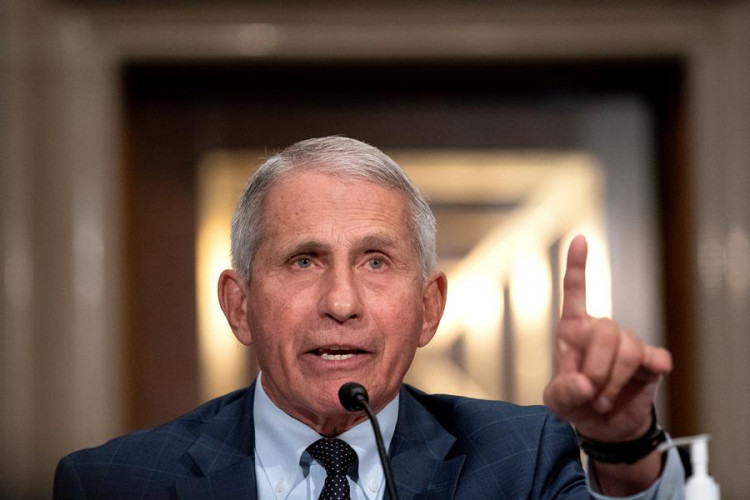
Former National Institute of Allergy and Infectious Diseases Director Dr. Anthony Fauci invoked his Fifth Amendment right against self-incrimination during a contentious Senate hearing Wednesday, refusing to answer questions about the origins of COVID-19 and the federal government's pandemic response. The hearing, convened by the Senate Homeland Security and Governmental Affairs Committee under Chairman Sen. Rand Paul (R., Ky.), quickly evolved into a constitutional and political confrontation over the committee's investigation into coronavirus research funding and the government's handling of the pandemic.
Fauci appeared under subpoena after Paul sought testimony as part of the committee's ongoing review of COVID-19-related federal policies. Rather than responding to the committee's questions, Fauci announced at the outset that he had been advised by legal counsel to invoke the Fifth Amendment, saying he would not provide testimony that could potentially be used against him in future legal proceedings.
In his opening statement, Fauci acknowledged the significance of his decision.
"Although it pains me to do so," Fauci told senators, he was invoking his constitutional right "to refrain from answering your questions."
The Fifth Amendment protects individuals from being compelled to provide testimony that could incriminate them in criminal proceedings. The protection applies not only in court but also during congressional hearings, and invoking the privilege does not by itself constitute evidence of criminal conduct or wrongdoing.
Fauci repeatedly declined to answer every substantive question posed by Paul, stating each time that he was following the advice of his attorneys. During prepared remarks, Fauci argued that the hearing itself was designed to advance Paul's longstanding public campaign against him rather than to gather factual information about the pandemic.
Fauci accused the Kentucky senator of pursuing testimony that could later support criminal allegations.
"The only conclusion I can reach is that the sole reason he is calling me before this committee is to get me to say something-anything-that could vindicate his repeated public pledges that I end up, in his words, 'behind bars,'" Fauci said.
He also criticized what he described as Paul's "obvious obsession with calling for my prosecution" and objected to the public release of excerpts from his personal journal before the hearing. Fauci noted that he had testified before or briefed Congress more than 200 times during nearly four decades in public service, arguing that he had consistently cooperated with lawmakers throughout his career.
Paul, however, continued questioning Fauci despite the repeated refusals to answer. After several exchanges, the committee chairman warned that the witness's decision could have consequences for the investigation.
"There will be repercussions to your refusal to testify today," Paul told Fauci, while also accusing the former NIAID director of obstructing the committee's inquiry into COVID-19 and federal research funding.
The hearing became more contentious when Fauci's attorney attempted to address the committee without being recognized by the chair. Paul ruled the attorney out of order, and after the dispute escalated, security officers escorted the attorney from the hearing room. Following the hearing, Fauci's legal team said he had exercised a constitutional right available to every witness appearing before Congress.
Democratic senators on the committee strongly defended Fauci's decision. Sen. Gary Peters (D., Mich.) argued that responsibility for the federal pandemic response spanned multiple administrations and agencies, cautioning against assigning blame to a single official. Sen. Richard Blumenthal (D., Conn.) described the proceedings as "a 'show trial'" and said invoking the Fifth Amendment was "the more prudent course." Blumenthal also praised Fauci's decades of public service, telling the committee, "Dr Fauci has saved lives."