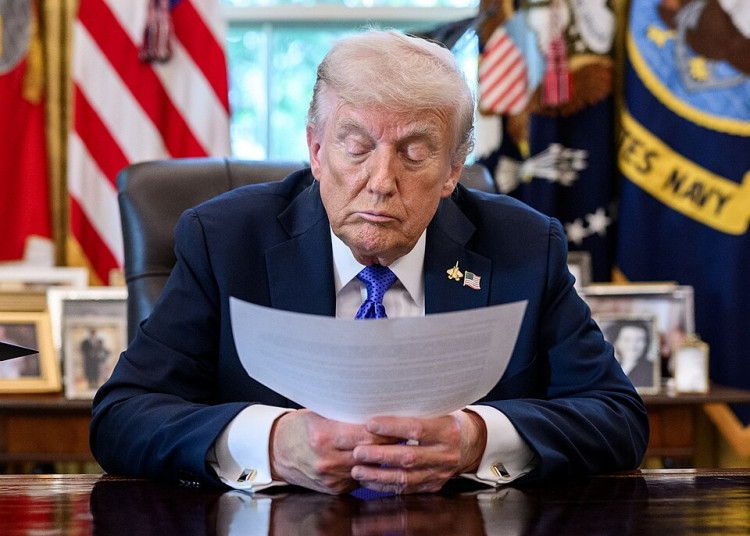
President Donald Trump has publicly rebuked two of the nation's largest oil companies, ExxonMobil and Chevron, accusing them of profiting from higher energy prices during the Iran conflict and calling on them to reduce gasoline prices for American consumers. The comments mark one of Trump's sharpest criticisms of the U.S. oil industry since returning to the White House, despite his broader support for expanding domestic fossil fuel production.
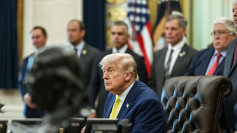
Speaking to reporters at the White House on Monday, Trump argued that soaring corporate earnings had come at the expense of drivers coping with elevated fuel costs. His remarks followed quarterly earnings reports showing the two companies collectively generated more than $26 billion in profit during the three months ending in June.
"They're making too much money based on a shortage," Trump said. "I don't like it."
The president singled out both companies by name.
"Chevron: too much money. ExxonMobil: too much money," Trump said. "They're going to give some of that back to the public and they better cut the retail price, the consumer price."
Trump's criticism comes after months of volatility in global oil markets triggered by the conflict involving Iran. Before hostilities escalated in late February, Brent crude traded near $70 per barrel. Concerns over disruptions to supplies moving through the Strait of Hormuz later pushed prices to around $126 per barrel in April before easing to roughly $85 per barrel in recent weeks.
The Strait of Hormuz remains one of the world's most important energy chokepoints, carrying approximately one-fifth of global oil and liquefied natural gas shipments. Even the possibility of disruptions along the route has historically driven significant swings in international crude prices.
Trump predicted energy markets would eventually stabilize if the conflict subsides.
"I think oil prices are going to drop through the floor," he said.
The rise in crude prices translated into exceptional quarterly results for major producers.
Second-quarter earnings included:
- ExxonMobil: $14.5 billion in profit, its strongest quarterly performance since the energy-price surge following Russia's invasion of Ukraine in 2022.
- Chevron: $12.2 billion in profit, the highest quarterly earnings in the company's history and roughly five times higher than the same quarter a year earlier.
Neither ExxonMobil nor Chevron immediately responded publicly to Trump's remarks.
Although the president linked the companies' profits to higher gasoline prices, industry analysts note that integrated oil companies generate earnings from multiple business segments, including crude production, refining, chemicals and international operations. Corporate profits therefore are not determined solely by retail gasoline prices.
Consumers, however, have increasingly felt the impact of higher energy costs. According to AAA, the national average price for regular gasoline has climbed to about $4.11 per gallon, compared with roughly $3.00 before the Iran conflict escalated. Rising fuel prices have become an important political issue as inflation continues to weigh on household budgets ahead of the midterm elections.
Trump has repeatedly urged lower gasoline prices throughout the conflict. In June, he wrote on Truth Social that "Gasoline Retailers must get their Prices down, IMMEDIATELY," warning that companies failing to do so would face "big problems." His administration has also directed the Department of Justice to examine potential price gouging within segments of the fuel market.
Energy executives maintain that oil producers do not directly control the prices motorists ultimately pay at service stations. Following BP's quarterly earnings report, which showed the company also benefited from stronger oil markets, Chief Executive Meg O'Neill defended the industry's pricing structure.
"The reality is, we produce a global commodity, and the product we sell hangs off that global commodity price," O'Neill said.