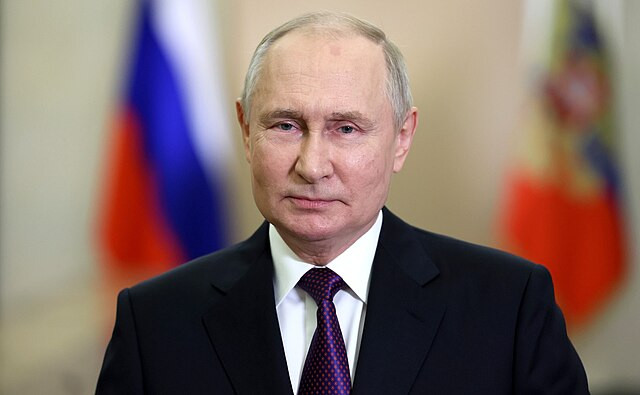
Russia's economy returned to growth in the second quarter, but mounting pressure from wartime spending, sanctions and Ukrainian attacks on infrastructure is raising a potentially counterintuitive concern among analysts: President Vladimir Putin could have an incentive to escalate the war rather than wait for Moscow's financial position to deteriorate.
Russian gross domestic product expanded 1.3% from April through June, according to figures cited by Trading Economics, marking its strongest performance since the first quarter of 2025. The expansion followed a 0.2% contraction during the first three months of this year.
The headline numbers have helped Russia continue to defy predictions that Western sanctions would rapidly cripple its economy. Yet analysts cited by CNBC said the resilience increasingly rests on government military spending, elevated taxes and subsidized bank lending-policies that can sustain activity in the short term while creating longer-term strains.
That imbalance is feeding concern that worsening economic conditions wouldn't necessarily push the Kremlin toward a negotiated settlement. Instead, Moscow could conclude that it has a narrowing window in which to intensify military operations and try to secure more favorable terms before its resources become more constrained.
"If I were Putin, God forbid, I would probably decide that it is in my interest to escalate now and try to finish the war on my terms, than wait until the money ends sometime in the future," Alex Kolyandr, director for Europe at consulting firm Eurasia Group, told CNBC.
The concern comes as Ukraine increasingly targets Russia's economic infrastructure far beyond the front lines. Kyiv launched a large drone operation over the weekend involving hundreds of unmanned aircraft, according to Euronews, extending a campaign designed in part to impose economic costs inside Russia.
Among the targets was a major warehouse belonging to Wildberries, Russia's dominant online retailer. Drones struck the company's facility at the Koledino industrial park in Podolsk in the Moscow region, triggering a large fire roughly 260 miles from the Ukrainian border.
The latest attack adds to mounting disruption across Wildberries' logistics network. Seven hubs operated by the retailer have been taken out, according to the report, making commercial distribution infrastructure another pressure point in Ukraine's expanding long-range campaign.
Energy infrastructure has been an even more consequential target. Repeated Ukrainian drone attacks on Russian oil refineries have disrupted fuel production and contributed to shortages in parts of the country, bringing the economic effects of the war closer to Russian consumers.
The fuel problems initially emerged in May before appearing to ease toward the end of July. A renewed wave of Ukrainian drone strikes beginning in early August has reversed some of that improvement, with restrictions and gasoline lines again reported in parts of Russia.
The developments illustrate the increasingly complicated relationship between Russia's battlefield strategy and its domestic economy. Heavy military expenditure can boost measured economic output because factories, defense contractors and associated industries remain busy, but such growth doesn't necessarily translate into stronger household finances or a more productive civilian economy.
Sanctions add another layer of pressure by restricting Russia's access to Western capital, technology and markets. Moscow has adapted by redirecting trade and increasing domestic production in some areas, allowing the economy to withstand restrictions longer than many early forecasts anticipated.
Putin is simultaneously confronting an adversary that is attempting to raise the cost of continuing the conflict. Ukrainian strikes against refineries, warehouses and logistics facilities can force Russia to divert resources toward air defenses and repairs while disrupting civilian economic activity far from the battlefield.