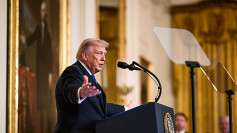
President Donald Trump displayed a visibly swollen and bruised right hand during two White House appearances this week, renewing attention on a condition the administration has previously attributed to frequent handshaking and his long-term daily use of aspirin.
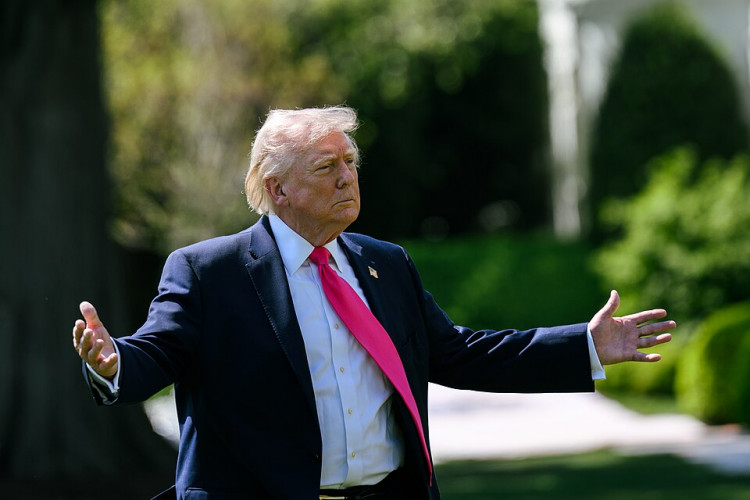
The 80-year-old president's hand was clearly visible Monday as he spoke on the White House South Lawn about construction of a new presidential helipad. Cosmetics appeared to cover portions of the discoloration, though bruising remained visible as Trump gestured during an appearance that lasted more than 20 minutes.
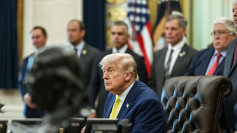
Trump's hand attracted attention again Wednesday during a Roosevelt Room event attended by cryptocurrency and financial-industry executives. Reuters photographs showed discoloration beneath what appeared to be makeup as the president discussed digital assets, data centers and other administration priorities.
The White House didn't immediately provide a new explanation for the appearance of Trump's hand this week. Officials have previously said the recurring bruising results from extensive handshaking combined with aspirin use, pointing to the president's frequent interactions with members of the public.
Trump has said he takes 325 milligrams of aspirin daily, a practice he has maintained for roughly 25 years. The president discussed the regimen in a January interview with The Wall Street Journal, saying his decision was partly based on personal preference rather than simply following standard preventive dosing.
"I am a little superstitious," Trump told The Wall Street Journal. "They say aspirin is good for thinning out the blood, and I do not want thick blood pouring through my heart. I want nice, thin blood pouring through my heart. Does that make sense?"
Trump has also acknowledged using cosmetics to conceal the bruising, saying the process takes him roughly 10 seconds. Aspirin's blood-thinning effect can make bruising more noticeable, although the administration hasn't provided a fresh medical assessment specifically addressing this week's swelling.
The White House disclosed last year that Trump had been diagnosed with chronic venous insufficiency, a condition in which veins have difficulty returning blood efficiently to the heart. The administration made the disclosure after swelling in the president's lower legs and ankles generated public attention.
Trump has said he tried compression socks to manage symptoms but stopped wearing them. He instead sought to avoid remaining seated for long periods, according to his previous comments about the condition.
The president's known venous condition primarily concerns circulation in the legs, while the White House's explanation for the hand bruising has focused separately on aspirin and handshaking. No information provided by the administration has established that the chronic venous insufficiency is responsible for the appearance of his right hand.
Trump spent much of Monday's South Lawn appearance discussing changes to the White House grounds and buildings. He spoke about a new helipad and renovations to the White House ballroom, saying the project would include bomb-shelter capabilities.
The president also veered into an extended discussion of his involvement in construction and design decisions, including flagpoles installed on the White House grounds. Trump described himself as "very good at flagpoles" while discussing his role in the projects.
By Wednesday, the president had shifted to technology and financial policy. During the Roosevelt Room meeting, Trump voiced support for new data centers, including infrastructure needed to accommodate the rapid expansion of artificial intelligence, while also discussing cryptocurrency regulation.
Trump also spoke about his relationship with North Korean leader Kim Jong Un, whom he has expressed interest in meeting again. The remarks came as his administration continues to balance diplomatic overtures toward Pyongyang with longstanding U.S. security commitments in Asia.