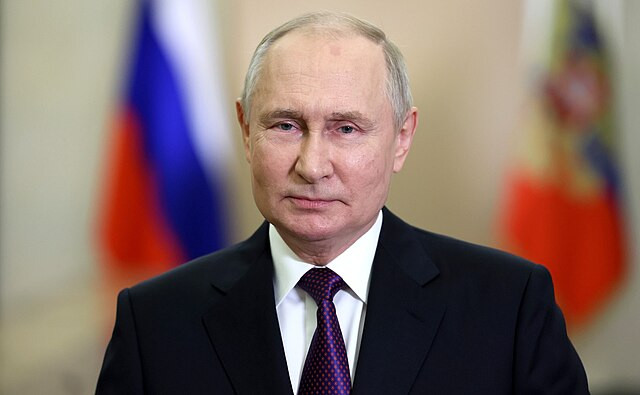
Russian President Vladimir Putin has authorized the government to take temporary control of privately owned critical infrastructure when owners fail to adequately protect their facilities, a significant expansion of state authority as Ukraine intensifies attacks on energy, logistics and commercial targets inside Russia.
The decree covers strategically important assets in sectors including fuel and energy, telecommunications, transportation and logistics. Under a "temporary administration," Russian authorities could assume control over property, ownership rights and company shares when the government determines that operators have failed to provide sufficient security.
The Kremlin framed the measure as a response to weaknesses in defenses around facilities increasingly exposed to Ukrainian attacks, particularly drones. Kremlin spokesman Dmitry Peskov said some private owners haven't taken adequate precautions despite the growing threat.
"Quite often the owners of enterprises do not pay proper attention to taking measures to ensure security, anti-drone security," Peskov said. "Wherever security measures are not being taken in critical areas, corresponding proposals will be submitted."
Putin's move comes as Kyiv broadens its campaign against Russia's economic infrastructure beyond the oil refineries, storage sites and other energy installations that have been frequent targets. Parts of Russia and Russian-controlled Crimea have experienced fuel shortages in recent months as Ukrainian forces increased attacks on oil-related facilities.
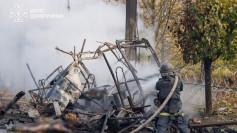
Ukraine is now putting greater pressure on Russia's sprawling retail and logistics networks. Ozon, Russia's second-largest online retailer, said its logistics center in the Samara region was struck, triggering a warehouse fire and forcing the evacuation of hundreds of employees.
"The attack caused a fire in the warehouse. All systems operated normally, and we evacuated over 500 employees within minutes. Unfortunately, there are still some casualties. We will provide them with all necessary support," Ozon said on social media.
The strike also disrupted the company's distribution network. Ozon said merchandise stored at the affected warehouse had been taken off its online marketplace and that orders already moving through the facility would be canceled.
"We have removed the products stored in the warehouse from our marketplace; they are currently unavailable for ordering. Orders shipped from this warehouse will be canceled, and customers will receive refunds," the company said.
The Samara strike was part of a wider campaign. According to CNBC, six Ozon facilities were targeted by Ukraine over a three-day period, indicating an increasingly systematic effort to disrupt Russia's commercial logistics infrastructure rather than isolated attacks against individual warehouses.
Wildberries, Russia's largest online retailer and often compared with Amazon because of its enormous domestic e-commerce network, has also been targeted. Ukrainian forces have said such distribution centers can store or transport dual-use products that contribute to Russia's military supply network.
Ukraine has presented the campaign as an extension of its long-range strategy for imposing economic costs on Moscow while complicating the logistics supporting Russia's invasion. Kyiv has increasingly sought to move the economic consequences of the war deeper into Russian territory.
"Systematic strikes on storage centers holding dual-use goods are disrupting the enemy's logistics and negatively impacting Russia's economy as a whole," Ukraine Defense Forces said. "After Ukrainian units hit 15 of Wildberries' largest logistics hubs, it's now Ozon's turn. Our long-range sanctions are working - both spectacularly and effectively."
The phrase "long-range sanctions" reflects Kyiv's argument that military strikes can achieve some of the economic effects sought through conventional international sanctions. By damaging warehouses, energy facilities and distribution networks, Ukraine is attempting to raise costs for Russian businesses while forcing Moscow to devote additional resources to air defenses and infrastructure protection.
The campaign also increases risks for companies whose operations serve both civilian consumers and Russia's broader wartime economy. Moscow's new takeover authority gives the government another mechanism for intervening when officials decide private operators haven't sufficiently protected strategically important assets.
Putin has warned that Russia will respond by expanding its own attacks on Ukrainian economic infrastructure. According to CNBC, the Russian president accused Kyiv of opening "Pandora's box" by striking economic targets inside Russia and pledged retaliatory attacks against Ukrainian economic assets.