President Donald Trump renewed a threat against Kharg Island, the hub for roughly 80% of Iran's oil exports, after U.S. and Iranian forces exchanged attacks over the weekend for the first time in more than a month, threatening to disrupt a period of relative calm around the Strait of Hormuz.
The renewed hostilities came as Washington intensifies both military and economic pressure on Tehran. U.S. forces struck two Iranian rocket launchers on Larak Island, saying Iranian units appeared to be preparing rockets capable of deploying sea mines into one of the world's most important shipping corridors.
"Last week, CENTCOM completed clearing sea mines from the strait's international shipping routes. U.S. forces are monitoring the area closely and remain prepared to protect the free flow of commerce through this essential waterway," U.S. Central Command spokesperson Tim Hawkins told CNBC.
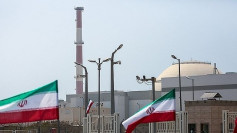
Trump subsequently turned his attention to Kharg Island, a strategically important terminal through which most Iranian crude exports are shipped. The president shared an AI-generated video depicting an attack on the island with a caption saying it was "being blown to smithereens."
The post didn't amount to an announcement that the U.S. had ordered or conducted an attack on Kharg. It nevertheless revived the possibility that Washington could target infrastructure central to Iran's remaining oil-export capacity if the confrontation escalates further.
Iran responded militarily, according to Iranian and local media accounts, by launching missiles toward U.S. bases in Jordan. Iranian forces claimed they "destroyed the technical and repair infrastructure, as well as the enemy fighter deployment sites." The supplied reports don't provide independent confirmation of the claimed damage.
Iranian forces also said Monday that a supertanker had been disabled and caught fire after striking two naval mines. Iran's Foreign Ministry blamed Washington for the latest deterioration, saying the U.S. bears "full responsibility" for any escalation resulting from the initial American strikes.
The military flare-up comes only days after Tehran suggested negotiations could still resume. Iranian Foreign Minister Abbas Araghchi said last week that a return to diplomacy with Washington "isn't impossible," while making clear that Iran expected steps from the U.S. before talks could restart.
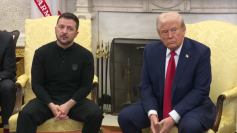
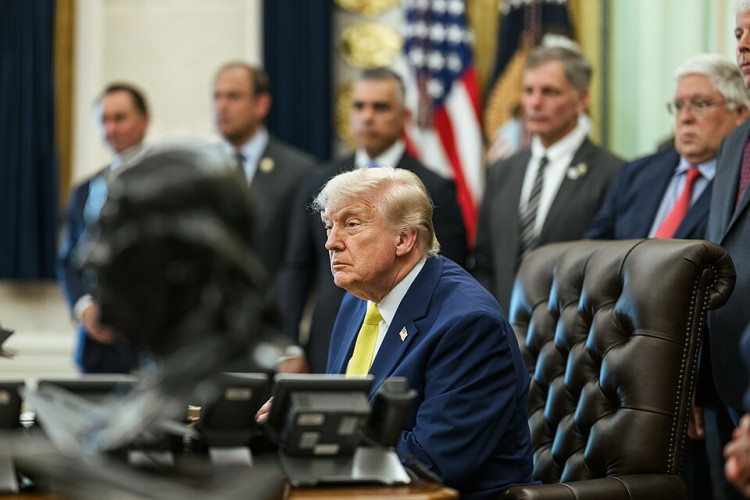
Trump publicly showed little interest in reopening that channel. Speaking to reporters in the Oval Office hours earlier, the president said the U.S. doesn't "want to speak with them."
"We're not looking to meet or anything," Trump added.
The confrontation is increasingly being fought through Iran's oil revenues as well as military strikes. Washington's naval blockade of Iranian ports has sharply reduced Tehran's ability to move crude into international markets, putting pressure on one of the government's most important sources of foreign currency.
Kpler data cited in the supplied report showed Iran loading roughly 260,000 barrels of oil a day so far this month, compared with about 1.7 million barrels a day during the corresponding period last year. That represents a decline of more than 80%.
Much of the contraction followed Washington's decision to reimpose the blockade on July 14 after a memorandum of understanding between the U.S. and Iran collapsed. Since the blockade resumed, Iran has loaded roughly 70% fewer barrels, according to the data.
That makes Kharg Island particularly significant in the renewed confrontation. With about four-fifths of Iranian oil exports normally passing through the island, a disruption there could further restrict Tehran's ability to generate petroleum revenue beyond the losses already imposed by the blockade.
The Trump administration is simultaneously widening its financial campaign. Treasury Secretary Scott Bessent earlier this week announced plans for secondary sanctions targeting companies and financial institutions accused of "enabling" Iran to continue conducting economic activity.
Bessent told The Associated Press on Sunday that another bank is expected to be sanctioned this week as Washington attempts to isolate Tehran further from international finance.
"This is going to be financial violence if we have to," Bessent said.