U.S. Treasury Secretary Scott Bessent rejected Russian overtures for expanded economic cooperation during a meeting with Finance Minister Anton Siluanov at the G20 gathering in Asheville, North Carolina, telling Moscow that no progress would be possible while Russia's war in Ukraine continues, according to Axios.
The meeting marked a rare high-level economic encounter between Washington and Moscow and came as Russia attended the G20 gathering for the first time since the war began more than four years ago. The Trump administration invited Russia despite opposition from several European governments.
Siluanov raised potential areas in which the U.S. and Russia could cooperate, according to Axios. Bessent interrupted the discussion and made clear that Washington wouldn't offer economic relief or move toward broader cooperation until the conflict in Ukraine ends.
The exchange underscored the limits of the Trump administration's willingness to re-engage Moscow economically even as Washington reopened a diplomatic channel by inviting Russian officials to the G20. Bessent's position tied any potential improvement in economic relations directly to developments on the battlefield.
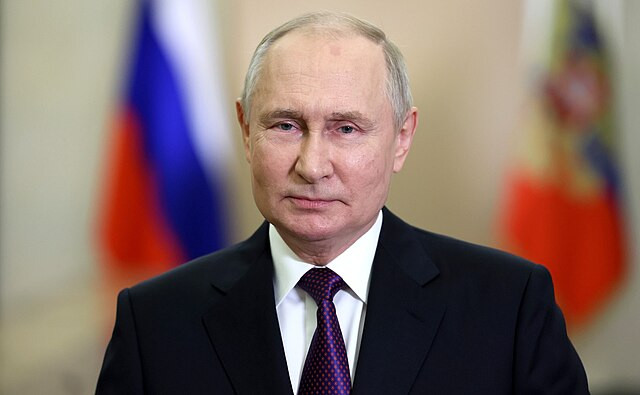
There are few signs that Moscow is preparing to wind down the war. Russian President Vladimir Putin has reportedly told allies that his personal political survival could depend on achieving significant objectives in Ukraine, according to The Economist.
"They will hang me," Putin told allies at one point during the war, The Economist reported.
The Economist said that assessment has influenced Putin's willingness to continue escalating despite Russia's difficulty achieving major battlefield gains. Kyiv expects Russia to expand drone and missile attacks during the winter, while Moscow could also order the mobilization of hundreds of thousands of additional troops.
The potential escalation isn't limited to Ukraine. Lithuania, Poland, Latvia and Estonia have warned that Russia could increase pressure on NATO members through sabotage or other forms of destabilization, according to Reuters.
Lithuania has said Moscow could be considering a staged attack, while Poland, Latvia and Estonia have raised concerns about possible acts of sabotage. Governments in the region have responded by stepping up protection around strategically important infrastructure.
"We are not naive, we see the information, we read between the lines and we are doing our homework," Lithuanian Defence Minister Robertas Kaunas told Reuters.
"We are increasing the security of our critical infrastructure, we constantly exchange information with our intelligence on what to do next," Kaunas added.
Lithuania has deployed a military unit to reinforce riot police protecting several critical facilities, including its liquefied-natural-gas import terminal, an oil-products terminal, a major electricity connection with Poland and a hydroelectric plant.
"We are clearly signaling that, if needed, we will be defending ourselves," Kaunas said.
The heightened European security concerns come as Russia assesses a changing geopolitical environment beyond Ukraine. Moscow believes Washington has been weakened by the six-month U.S.-Iran war, a conflict that has absorbed American military and diplomatic attention while Russia continues its campaign against Kyiv.