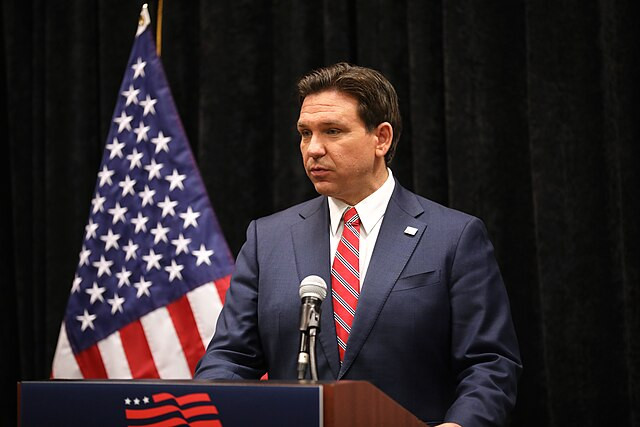
Florida Gov. Ron DeSantis stepped into the fallout from the Lindsay Clancy murder trial Friday, offering what he called "asylum" to the lone holdout juror after NBC10 Boston reported that the man had previously faced a domestic-violence charge and was subject to a restraining order during jury selection.
The intervention added a political dimension to an already contentious Massachusetts case that ended in a mistrial Sept. 4. Jurors had deadlocked 11-1 after seven days of deliberations, with 11 members prepared to find Clancy not guilty by reason of lack of criminal responsibility and one juror refusing to join them.
DeSantis accused NBC of trying to discredit the holdout because of his position in the case. "A man objected to allowing a woman to kill her three young kids and get away with it, so NBC is trying to smear that juror, whose identity should be protected," DeSantis wrote on X. "Another low for legacy media."
He added: "If the juror is being harassed, Florida will provide asylum - I'm sure he'd be welcomed and appreciated." The remarks came after NBC10 Boston promoted an investigation based on court records and interviews with relatives concerning the juror's background.
Clancy, 36, was charged with first-degree murder in the January 2023 deaths of her three children, Cora, 5, Dawson, 3, and Callan, 8 months, at the family's home in Duxbury, Mass. She has acknowledged strangling the children, while her lawyers argued that postpartum psychosis left her unable to appreciate the wrongfulness of her actions or conform her conduct to the law.
Prosecutors disputed that she lacked criminal responsibility, pointing to evidence they said showed planning and purposeful conduct. The psychiatric evidence, however, became central to the five-week trial, and the jury ultimately failed to reach the unanimity Massachusetts law requires.
NBC10 Boston reported that the holdout juror had been charged in 2021 after his teenage nephew called police and alleged that he saw his uncle grab his wife by the throat and throw her into a dresser. The charge was later dismissed, according to reports summarizing the station's investigation.
The station also reported that the nephew later sought a restraining order against the juror, alleging that the man had pushed him to the ground and repeatedly punched him. According to NBC10's reporting, that order was still in effect during jury selection.
Those circumstances raised questions about the juror-selection process because Massachusetts' standard juror questionnaire asks prospective panelists about arrests, criminal charges and court orders. The juror's answers haven't been made public, and there has been no judicial finding that he gave a false response or improperly concealed information during voir dire.
NBC10 also reported that the juror faced an eviction case over unpaid rent, with a judgment exceeding $12,000 entered while deliberations were underway. None of those personal matters by itself establishes juror misconduct, and the holdout has not publicly explained his reasoning.
The dispute over his conduct intensified after other jurors began describing the deliberations publicly. Jury foreperson Roni Carlson told NBC10 Boston that the holdout acknowledged having reasonable doubt but nevertheless declined to vote for a not-guilty verdict based on lack of criminal responsibility.
"He admitted he had reasonable doubt and I started filling out the forms, I was so excited," Carlson said. She said she stopped after the juror told the panel, "But I'm still not going to say that she's not guilty by reason of insanity."
Another juror, Nick Dargie, told ABC News that the holdout repeatedly failed to identify testimony or evidence supporting his position when other jurors asked him to do so. "There wasn't a single piece of evidence or witness testimony that he used to prove why he was thinking the way he was," Dargie said.
Dargie has also described unusual behavior during deliberations, including an allegation that the juror used an exercise band and water bottle while reenacting aspects of the killings. That account reflects Dargie's description and hasn't been independently established by a court.
Clancy's attorney, Kevin Reddington, has since renewed a motion asking Superior Court Judge William Sullivan to enter a required finding of not guilty, which would prevent prosecutors from retrying her. The motion relies in part on the 11-1 split and the foreperson's account that the holdout acknowledged reasonable doubt.
Prosecutors haven't announced whether they will seek a second trial if the motion is denied. A further hearing is scheduled for Sept. 29, while Clancy remains in a psychiatric facility.