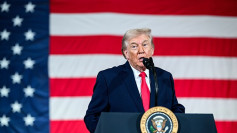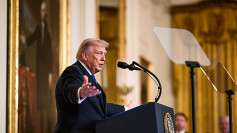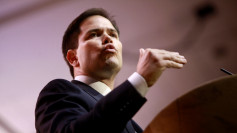
President Donald Trump said an Iranian security threat prompted the withdrawal of a dozen U.S. bombers from RAF Fairford in Britain, contradicting Secretary of State Marco Rubio's explanation that the aircraft were moving as part of routine rotations.
U.S. officials said intelligence indicating a possible Iranian drone attack led the military to return the B-1 bombers to the United States over the weekend, only weeks after their deployment. The Pentagon confirmed their departure but did not publicly detail the intelligence behind it.
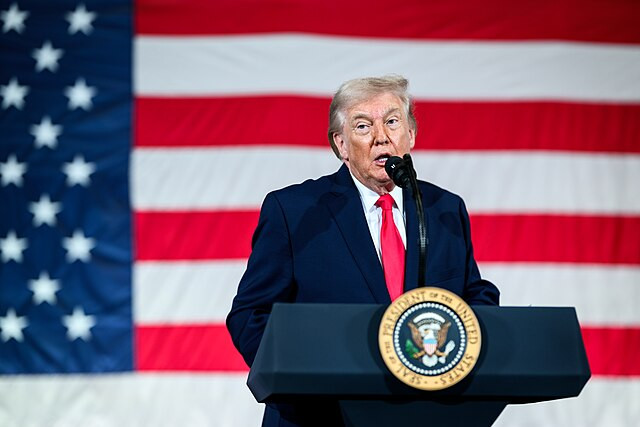
"They didn't fly out by accident ... there was a threat. We moved them around a little bit," Trump told reporters Monday. He said U.S. authorities knew who was responsible for the threat and their connections to Iran.
Hours earlier, Rubio had described the movements as "regular rotations" of U.S. Air Force assets and said they were not directly connected to an Iranian threat. The differing accounts left the administration without a consistent public explanation for the withdrawal.
Trump declined to confirm whether the suspected plan involved launching drones from British territory. "I can't tell you that. If they did they will suffer greatly," he said when asked about that possibility.
Such an attack could endanger American personnel and strategic aircraft while extending the Middle East conflict onto British soil. The reports describe a suspected threat; they do not establish that a drone strike against Fairford was carried out.
The Pentagon said all U.S. bombers deployed to the base had returned to their home stations. It also emphasized that the broader force of B-1, B-2 and B-52 aircraft remained able to conduct precision strikes, including missions flown directly from the continental United States.
British authorities have been investigating possible threats to the installation. The BBC reported that a 27-year-old British-Iranian man was arrested in London Thursday, another man was questioned under caution and two properties were searched.
U.S. officials said they had not established whether people arrested in the British investigation were connected to the suspected drone plan or a separate possible attack. The existence of that investigation therefore does not, by itself, confirm the operational links described in the intelligence reports.
British Prime Minister Andy Burnham publicly pointed to Tehran. "There are strong indications that Iran played a part in what happened over the weekend at RAF Fairford," he told the BBC Thursday, without presenting supporting details.
Iranian Foreign Minister Abbas Araghchi rejected Burnham's allegation, saying he was "barking up the wrong tree."
Israeli Prime Minister Benjamin Netanyahu separately said Israel had supplied Britain with intelligence identifying an Iranian threat. Rubio spoke with Netanyahu Monday while traveling to Iceland, according to the State Department; the supplied accounts do not disclose the substance of that call.
Rubio had also attributed the incident to a "foreign actor," while declining to elaborate. Citing threats against American interests abroad, he warned: "There will be repercussions for that, if it ever were to happen or even attempted."