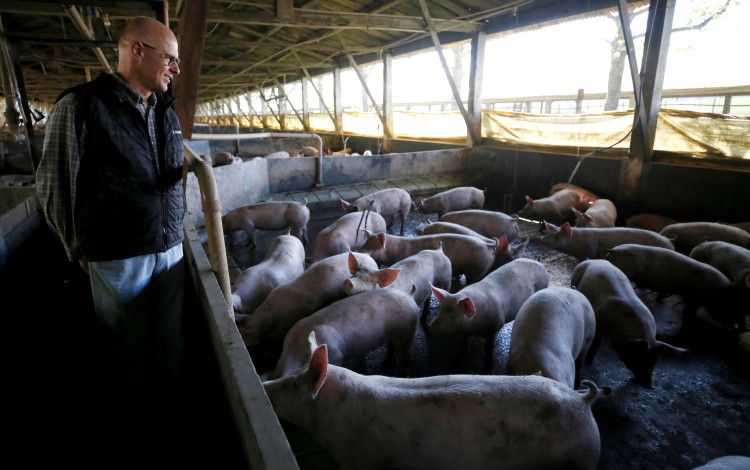
African swine fever has affected several pig farms in China. Nearby countries like the Philippines is now afraid that the disease may affect its slaughterhouses that may end up wiping out the hog industry. So to control the epidemic from spreading, the Chinese government is taking some measures to prevent it.
According to The Pig Site, China's agriculture ministry advised slaughterhouses to run an African swine fever virus test for pig products before they sell it to the market. Ministry of Agriculture and Rural Affairs noted on its website that butchers must separately slaughter pigs from different origins. They can only sell its product if the same batch of pigs' blood tested negative.
If the slaughterhouses' hogs are African swine fever positive, it must gather all pigs for slaughter. The regulation, which will take effect on February 1, also noted it should suspend its operations for at least 48 hours. China also banned feeding pigs with kitchen waste and transporting live pigs and products from infected areas, among others.
African swine fever outbreak affected 73,000 pigs in Heilongjiang province, the largest farm infected by the disease. It only means the occurrence increases severity thus the government is now taking precautions to control it. In total, it has affected 23 provinces and municipalities across China since the epidemic started in August last year.
"The African swine fever situation is only getting worse," China-America Commodity Data Analytics consultancy analyst Yao Guiling said. "Small farms, big farms, slaughterhouses, feed - the whole production chain basically all got hit."
In the Philippines, hog raises fear the possible African swine fever outbreak in the country. National Federation of Hog Farmers Chester Warren Tan said that once the disease breaks out, it may overwhelm the hog industry. The country is said to lack measures to control the infection from spreading.
GMA News Online reported the Philippines' hog industry is not ready for the African swine fever outbreak. The virus quickly spreads that lead to the pigs' death. It also cited there is no vaccine available in the country.
Tan also added countermeasures to control the disease like footbaths and disinfection equipment "at strategic entry points" are not available. The Philippines only imports five percent of pork supply while the remaining 95 percent is locally sourced.
So, if African swine fever hits the Philippines, it poses a big threat to the hog industry and the pork's prices in the market. The country now bans importing pork from countries hit by the epidemic like China, Hungary, Latvia, Poland, Romania, Russia, and Ukraine.