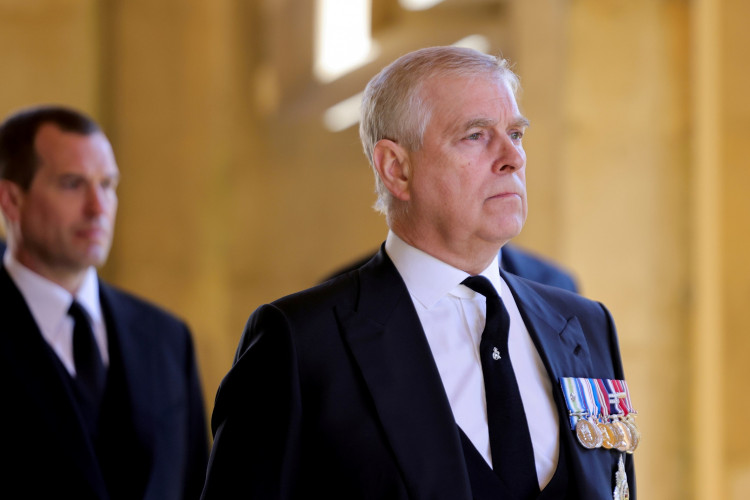
The arrest and questioning of Andrew Mountbatten-Windsor, formerly known as Prince Andrew, has intensified scrutiny of the British royal family's handling of long-running controversies tied to Jeffrey Epstein, after investigators reportedly examined newly released documents suggesting the former royal shared sensitive government information with the convicted financier.
Andrew, who turned 66 on Feb. 19, was taken into custody by Thames Valley Police and questioned for roughly 11 hours in connection with allegations of misconduct in public office. Authorities are examining documents that surfaced following a major release of Epstein-related files on Jan. 30, 2026.
The materials reportedly indicate that Andrew, during his tenure as the United Kingdom's special representative for international trade and investment, may have forwarded confidential trade reports to Epstein.
The allegations come months after King Charles III stripped Andrew of several remaining royal privileges in November 2025, removing his HRH style, princely title and the Dukedom of York following years of mounting scandal linked to his relationship with Epstein.
Royal historian Andrew Lownie, author of Entitled: The Rise and Fall of the House of York, said the former royal's reaction to the investigation reflects a profound struggle with the loss of status that defined his public identity for decades.
"He still thinks he's anointed, that it's deeply unfair people have turned on him," Lownie said in comments to People magazine.
The remark underscores what Lownie describes as a persistent belief by Andrew that his position within the monarchy once offered protection from the scrutiny now facing him.
Lownie suggested that Andrew's sense of grievance stems from a lifetime spent within what he characterized as a highly insulated environment.
"He has been pampered all the way through his life, in this bubble," Lownie said. "Status is everything to him, it's his only sense of identity."
Investigators are now reviewing the circumstances surrounding Andrew's interactions with Epstein during the years when the royal served as Britain's trade envoy, a role that involved representing British business interests abroad and engaging with international political and commercial figures.
The probe focuses on whether sensitive government materials may have been improperly shared during that period.
Legal experts note that misconduct in public office is a serious charge under British law. If prosecutors ultimately bring charges and secure a conviction, the offense carries a theoretical maximum sentence of life imprisonment, although sentencing guidelines typically result in shorter prison terms for first-time offenders.
Beyond the legal implications, the investigation has reopened broader questions about the fallout from the Epstein scandal for the wider royal family.
Lownie argued that the consequences extend beyond Andrew himself, affecting relatives who remain in public life.
"They thought they'd be able to operate like this under the radar," Lownie said, referring to the belief within Andrew's circle that scrutiny could be avoided.
Attention has also returned to Sarah Ferguson, Andrew's former wife, whose past contacts with Epstein and Ghislaine Maxwell have drawn renewed examination following the release of additional documents.
The controversy has placed particular pressure on Princess Beatrice and Princess Eugenie, the couple's daughters, who maintain public roles while navigating the reputational impact of their parents' association with Epstein.
"They're caught between a rock and a hard place over loyalty to their parents and their future," Lownie said.
For the monarchy, the episode underscores how controversies tied to Epstein continue to reverberate years after the financier's death, raising questions about accountability, royal privilege and the ability of the institution to distance itself from one of its most enduring scandals.