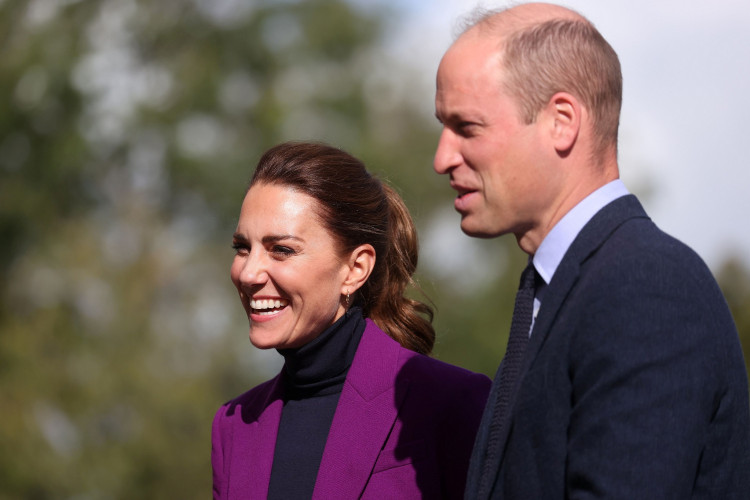
Prince William and Catherine, Princess of Wales could face a dramatically reduced royal support structure when they eventually inherit the British throne, according to royal historian Robert Hardman, who warned that the monarchy is entering a period of structural contraction following the reign of King Charles III.
In remarks published by The Telegraph on April 19, Hardman described a future in which the Prince and Princess of Wales may operate with far fewer senior royals than previous generations. "I think it's a crying shame that when William takes the throne, he and Catherine are effectively looking at quite a significant spell on their own, carrying the whole show," Hardman said.
The warning reflects mounting pressure on a monarchy already navigating reputational and demographic constraints. The institution has faced sustained scrutiny over the fallout from Prince Andrew's association with Jeffrey Epstein, while simultaneously contending with a shrinking pool of active working royals.
Hardman's assessment highlights a structural imbalance: fewer working members tasked with maintaining a high volume of public engagements, patronages and ceremonial duties. While the monarchy has deliberately streamlined operations in recent years, the reduced "bench strength" could place disproportionate demands on its most visible figures.
The remaining senior royals, though experienced, are aging. Hardman pointed to Prince Edward and Sophie, Duchess of Edinburgh, along with the Gloucesters, as key contributors to the monarchy's workload, but noted that they will all be "of a certain age" by the time William ascends the throne. He also referenced the Princess Royal, Princess Anne, who is approaching her late seventies, underscoring the limits of relying on long-serving figures indefinitely.
That dynamic leaves William and Kate confronting what amounts to operational compression. A smaller monarchy may align with public expectations for efficiency and cost control, but it also reduces capacity for the daily visibility that underpins the institution's relevance.
Hardman suggested the transition is already understood within royal circles. "We're all going to just have to accept things will be different," he said, adding, "We can't suddenly summon up extra royals." The comment reflects a pragmatic acknowledgment that succession planning must adapt to a leaner framework.
The current reign of King Charles has, in part, been shaped by these realities. His coronation in May 2023 marked a generational shift, but also introduced practical considerations tied to age and continuity. As the oldest monarch to take the throne, Charles's tenure has inevitably accelerated conversations around long-term succession.
Royal author Tom Quinn told Harper's Bazaar that such planning predates Charles's accession. "He's the oldest Prince of Wales to become king in history, so succession planning had begun before Charles came to the throne simply because of the age issue," Quinn said.
Rather than formal training, Quinn described a gradual transfer of responsibility, with William increasingly undertaking duties traditionally handled by the monarch. This approach effectively embeds preparation within the day-to-day functioning of the institution, allowing the future king to accumulate experience in real time.