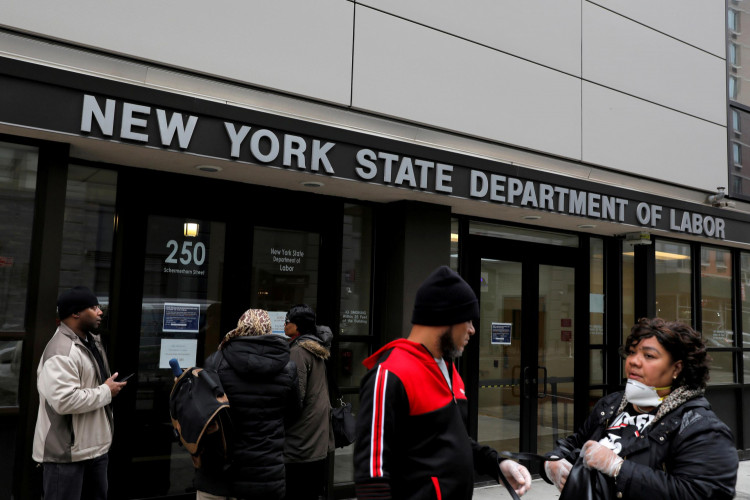
A record number of Americans filed a second consecutive week for unemployment insurance, as a national coronavirus lockout threatens to cause mass layoffs.
U.S. weekly jobless claims soared to 6.64 million in the week ending Saturday, the US Department of Labor said Thursday. That's more than double the report from the previous week which reflected filings that was more than four times the previous record.
While states shut down trade to prevent the deadly virus from spreading, the statistics on weekly claims were among the first concrete figures showing the devastating economic impact, revealing the degree to which US companies and employees are suffering from the global health crisis.
The figures could also add to pressure on the federal government to ensure that aid payments and loans flow rapidly to individuals and companies under the $2 trillion stimulus package.
Widespread job cuts related to the crisis have caused an increase in the number of Americans who filed unemployment insurance for their first week - the latest indication that the US economy is in deep decline as shutdowns aimed at suppressing the outbreak.
Once the government releases its work report for March, investors will get another glimpse of the harm done to the U.S. jobs market Friday. But Joseph Song, economist at Bank of America, said the real trauma will be exposed later. He expects the April work report to reveal "unprecedented" declines, and a double-digit unemployment rate.
U.S. stocks soared on Thursday as expectations for a price war truce between Saudi Arabia and Russia and a reduction in oil production rose, taking some sting from a startling spike in Americans filing jobless claims due to lockdowns.
The S&P energy index, which this year fell by more than 50 percent due to the Russia-Saudi price war and demand-driven coronavirus worries that lowered oil prices, climbed 9.08 percent.
Unemployment claims for the week ending March 21 had spiked to a high of 3.28 million at the time. Already in just two weeks almost 10 million Americans have been affected.
The surge started in mid-March, when the US ramped up steps of social distance to combat the coronavirus pandemic, closing down schools and factories and sending many staff home.
Meanwhile, Liz Ann Sonders, Charles Schwab's chief investment strategist, warned that the previous study could have been unfairly small due to a backlog of applications for benefits. There is anecdotal evidence that "many people who wanted to file claims couldn't do it because telephone lines were jammed," she told me recently.