Next week, US President Donald Trump will introduce a corporate council and medical experts to assist him with the "biggest decision" that he ever had to make on whether to reopen America back for business amid an ongoing global health treat.
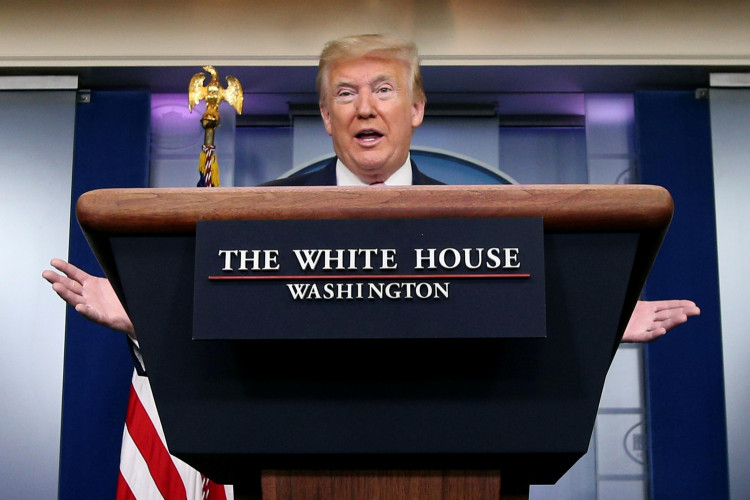
The president, lambasted by conventional allies with regards his combative daily updates on the coronavirus, took on a softer posture in a two-hour-plus session on Friday.
Trump and his top health advisers pointed to optimistic signs that the pandemic may be slowing, and the final death toll expected to be lower compared to previous estimates. It had sparked speculation that Trump is going to change direction and create an economic task force.
As a result of the pandemic, and the sluggish reaction to contain its spread, over 18,500 people have perished in the US, with more than half million confirmed cases of the disease.
According to Trump, he wants the country to be "opened as soon as possible," stressing that the task force will be manned by "great business leaders and doctors."
Dr. Ashish Jha, Harvard Global Health Institute director, told Business Insider that the US might loosen social-distancing constraints - but not in the immediate future, and only if the government steps up research and lab trials.
With COVID-19 hospitalization numbers dropping in California and New York but with total number of cases still increasing in the US, the president spent most of Friday's meeting with the coronavirus task force answering the issue of when the US should expect to return to normal.
Although state officials have the authority to lift restrictions that have battered economic growth across the nation, Trump has portrayed the issue as his own responsibility.
Trump said he didn't know "if I made a bigger decision, but I'm trying to surround myself with the best minds." He pointed out that "we want to open up the US as soon as possible."
The burden is that the United States now has more coronavirus fatalities compared to any other nation, surpassing Italy in the number of confirmed deaths overall. Friday saw 2,057 deaths linked to the disease, so far the deadliest day for the US.
Yet the shutdowns have put extreme pressure on food supply and the state jobless programs, which left millions without a source of income. Many said that they can't even file for unemployment, so the longer companies go without profits, the less likely they can come back to normalcy - if they even reopen.