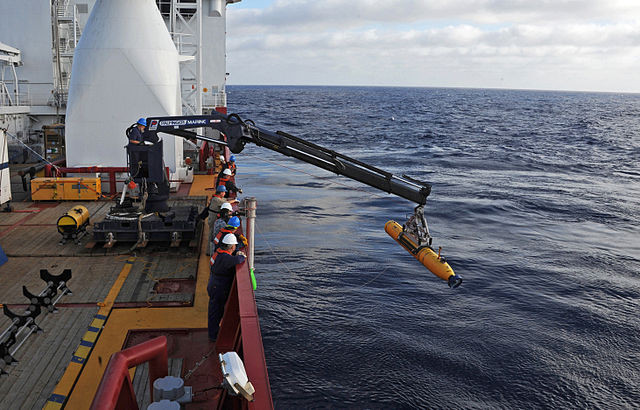
Malaysia will restart the deep-sea search for Malaysia Airlines Flight MH370 on Dec. 30, reopening one of the aviation world's most confounding investigations 11 years after the Boeing 777 vanished over the Indian Ocean. The government confirmed that U.S. robotics firm Ocean Infinity will resume seabed operations for 55 days, working intermittently across what officials describe as the area with "the highest probability of locating the aircraft."
The announcement marks the latest effort to resolve a catastrophe that has eluded investigators since March 8, 2014, when MH370 disappeared from radar 39 minutes after departing Kuala Lumpur for Beijing. Despite multinational search operations involving Australia, China and Malaysia-at one point covering roughly 46,000 square miles of ocean floor-no bodies and no major wreckage have ever been recovered.
Malaysia's transport ministry said in a statement that "the search will be carried out in targeted area assessed to have the highest probability of locating the aircraft." Ocean Infinity, which previously searched for the plane in 2018 under a "no find, no fee" contract, will again operate under a similar arrangement. The government will pay the company $70 million only if wreckage is found in the 5,790-square-mile zone identified for renewed exploration.
MH370 carried 239 people, including 227 passengers and 12 crew, with most travelers originating from China. Others were citizens of the United States, France, Australia, Indonesia, India, Ukraine, Canada and Malaysia. The disappearance sparked a global effort that extended from the South China Sea to the southern Indian Ocean as investigators attempted to reconstruct the jet's final hours.
The final words heard from the cockpit-"Good night, Malaysian Three Seven Zero"-remain central to the timeline. The plane never checked in with Vietnamese controllers as scheduled. Minutes later, its transponder went dark, and military radar tracked the aircraft turning back across the Malay Peninsula toward the Andaman Sea. Satellite data later indicated the aircraft likely flew for hours before crashing in the remote southern Indian Ocean.
Investigators have long wrestled with competing theories, from system failure to hijacking. A 495-page report released in 2018 said the aircraft's controls were "likely deliberately manipulated to go off course," but the inquiry stopped short of identifying a culprit, noting that a conclusion depended on locating the wreckage. Malaysian officials also said in 2018 they did not rule out "unlawful interference."
Ocean Infinity suspended its latest search earlier this year after a six-week effort was cut short by poor weather. Malaysia's transport minister said at the time that it was not "the season" for such work, indicating the operation would resume toward the end of 2025. Wednesday's announcement sets the formal timeline for that restart.
The southern Indian Ocean remains one of the harshest search environments on the planet, with depths reaching 2.5 miles and unpredictable weather systems. Previous sonar scans and autonomous underwater vehicle missions produced only scattered debris, including a flaperon discovered on Réunion Island in 2015 and additional pieces that later washed ashore along Africa's east coast.