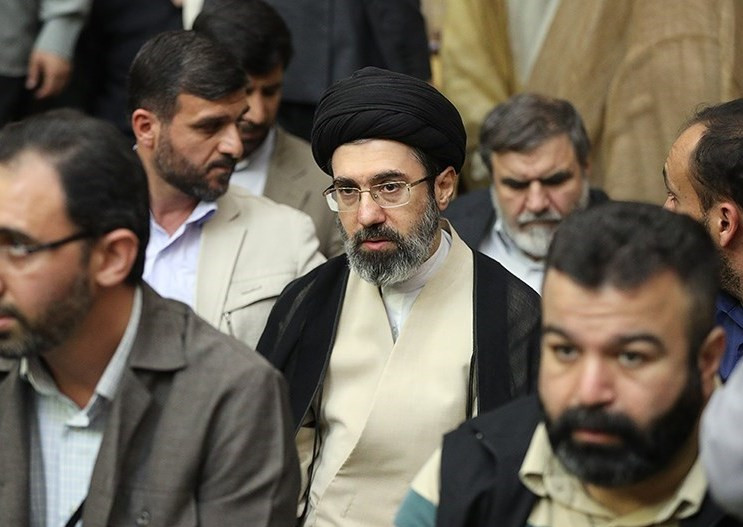
Iran's newly appointed Supreme Leader Mojtaba Khamenei issued a warning to the United States and its allies in a televised statement Thursday, vowing retaliation for casualties from the expanding conflict involving Iran, the U.S., and Israel, even as unverified reports circulate about his physical condition following recent airstrikes.
The 56-year-old cleric, elevated to the country's highest leadership position after the assassination of his father Ayatollah Ali Khamenei on Feb. 28, delivered his message through a presenter on Iranian state television rather than appearing publicly. The absence has fueled speculation among foreign observers and dissident sources that he may have been severely injured during the same wave of attacks that killed the elder Khamenei.
In the statement broadcast on March 12 and translated by BBC Persian, Mojtaba Khamenei signaled that Tehran intends to seek compensation from its adversaries.
"I emphasise that we will demand compensation from the enemy. If they refuse, we will seize their funds as we deem appropriate. If that proves impossible, we will destroy an equivalent amount of their property," the message said.
The remarks were interpreted by regional analysts as a direct threat toward the United States, which has led joint strikes with Israel against Iranian military infrastructure since late February. Iranian officials have framed the campaign as an act of aggression following the death of the elder Khamenei at his compound in Tehran.
Khamenei's statement also suggested that Tehran could use control over one of the world's most critical energy chokepoints as leverage.
He urged that the "lever of blocking the Strait of Hormuz" remain available, referencing the narrow waterway that carries roughly a fifth of global oil shipments and a significant share of liquefied natural gas exports.
The declaration came amid growing uncertainty about the new leader's condition. Reports from dissident sources and foreign media have alleged that Mojtaba Khamenei may have suffered serious injuries, including the loss of a leg, during recent airstrikes and could be hospitalized in Tehran. Iranian state media has rejected those claims, describing the leader as "lightly injured but safe."
The Iranian leadership transition occurred quickly after the assassination of Ayatollah Ali Khamenei, who had ruled the Islamic Republic for decades. Iran's Assembly of Experts, the clerical body responsible for selecting the country's supreme leader, confirmed Mojtaba Khamenei's appointment in early March.
His first message as leader blended personal grief with calls for retaliation. Addressing families affected by recent attacks, the statement referenced deaths within his own family as well as civilian casualties in Iran.
The speech mentioned the strike on a school in Minab, which Iranian officials say killed approximately 175 people, many of them children.
The message said the leader shared the grief of bereaved families, describing the loss of relatives and saying: "This stems from my shared experience with them."
Beyond rhetoric, the conflict has already triggered regional instability across the Persian Gulf. Iranian drone and missile strikes have targeted facilities in neighboring states hosting American forces, including attacks reported near Kuwait International Airport and infrastructure in Bahrain.
Regional governments have condemned the strikes, while Tehran has argued that the attacks are responses to U.S. military operations launched earlier in the conflict.
Meanwhile, the strategic Strait of Hormuz remains under heightened security pressure. Iranian naval activity, including reported mine deployments, has raised alarms among global shipping companies and energy markets concerned about disruptions to oil exports.
Western governments and energy analysts warn that any sustained closure of the strait could have severe consequences for global supply chains and crude prices. Iranian leaders have repeatedly invoked the threat during previous crises but have rarely attempted a full blockade.