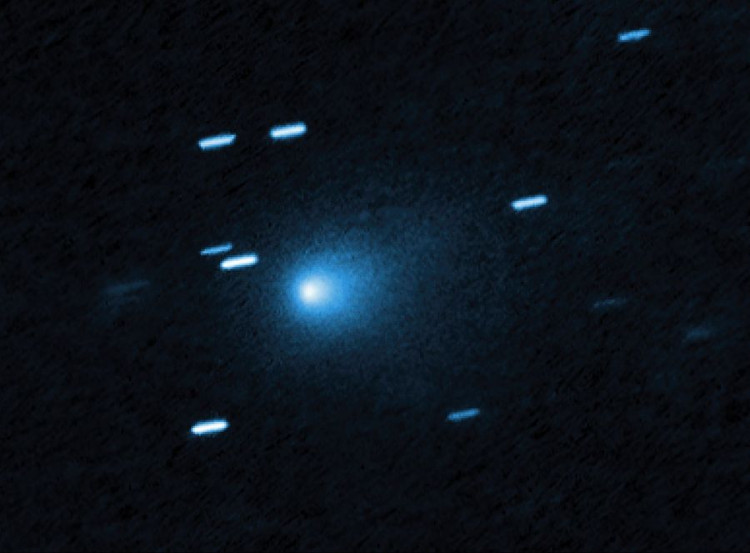
(Photo: NASA, ESA, David Jewitt (UCLA); Image Processing: Joseph DePasquale (STScI))
NASA is facing escalating questions from astronomers and independent researchers as scrutiny intensifies over the agency's handling of data on 3I/ATLAS, the third known interstellar object to enter the solar system and one of the most puzzling bodies ever detected. The object, discovered July 1, 2025 by the ATLAS telescope in Chile, will make its closest approach to Earth on December 19, 2025 at roughly 270 million kilometres-about half the distance recorded when Hubble captured its earlier images. With global observatories including the James Webb Space Telescope already tracking the visitor, concerns are mounting that vital observational details remain undisclosed.
The approach comes as 3I/ATLAS displays a series of anomalies that have upended expectations for cometary behaviour. Although its activity is fading as it moves farther from the Sun, astronomers note that the object's most unusual characteristics are becoming more pronounced. The most prominent feature-the so-called anti-tail-runs sharply counter to standard comet physics, prompting some researchers to argue that existing models offer inadequate explanations.
Traditional comet tails form when solar radiation pushes dust and gas away from the Sun. But 3I/ATLAS demonstrates the reverse: a long, bright plume pointed directly toward the Sun. The counterintuitive feature, exceeding a million kilometres in length, has been described by astronomers as stable, persistent and resistant to accepted theories of radiation pressure and solar wind. The phenomenon has led to heightened debate over what drives the plume and whether conventional cometary outgassing can account for its shape and scale.
Spectroscopic data has added further complexity. Measurements show unusually high CO₂ content alongside elevated Nickel and low Iron, a combination atypical of solar-system comets. Researchers have proposed that extreme internal pressure or exotic volatile interactions could be responsible, though none of the explanations resolve why the anti-tail remains intact over such extraordinary distances. These gaps have fueled speculation ranging from hyperactive outgassing to theories at the far end of the spectrum, including suggestions that 3I/ATLAS could be a non-natural object.
The uncertainties have collided with a separate controversy: whether NASA is providing timely transparency as the object accelerates toward its closest pass. Citizen astronomers have released increasingly detailed images from Earth-based equipment, setting off comparisons with limited updates from federal missions. Particular criticism has emerged around delayed releases from the Mars Reconnaissance Orbiter's HiRISE camera-delays NASA attributed to the U.S. government shutdown, which hindered image processing.
The lag has nonetheless seeded mistrust among some observers who point to missing technical briefings and unexpected adjustments to archived data. Those concerns have intensified as amateur astronomers report capturing images rivaling professional datasets, raising public expectations for what NASA should already be disclosing.