Apple is preparing to enter the foldable smartphone market in 2026, positioning a device widely referred to as the iPhone Fold as its first major hardware expansion since the arrival of the Apple Vision Pro. The move places Apple directly into competition with Samsung and other early leaders in foldable technology, as analysts and suppliers signal that the company has advanced its design and manufacturing plans. Multiple industry researchers, including Ming-Chi Kuo and Bloomberg's Mark Gurman, say Apple is targeting a launch window next year as development accelerates across its supply chain.
The company is expected to introduce a book-style design rather than a compact clamshell, adopting a form factor closer to Samsung's Galaxy Z Fold line. Early specifications circulating among suppliers indicate Apple is engineering a device that measures between 9 and 9.5 millimeters when folded and approximately 4.5 to 4.8 millimeters when opened. The outer display is projected to be roughly 5.5 inches, functioning like a standard iPhone screen, while the interior expands to 7.8 inches with tablet-like resolution.
Suppliers in Asia report that Apple is attempting to overcome one of the biggest limitations of foldable displays: the visible crease. Sources cited by UDN say the company has been testing structural reinforcements beneath the panel, including a metal plate designed to distribute stress during movement. The hinge mechanism is reported to incorporate liquid metal produced through precision die-casting, a method intended to boost durability and minimize long-term wear marks.
Apple's materials strategy appears more aligned with its upper-tier iPhones than with existing foldables from competitors. Titanium is expected to serve as the primary structural metal, and analysts note the company may blend titanium with aluminum or stainless steel to improve rigidity. The frame design closely resembles the ultra-thin architecture Apple has developed for its upcoming iPhone Air, adapted to withstand repeated folding cycles.
Prototype information shared among component suppliers points to dual 48-megapixel rear cameras, an outer punch-hole camera and an under-screen internal camera. Apple is not expected to include Face ID, instead relying on a Touch ID button integrated into the side of the device-an approach similar to that used on recent iPads. The foldable will reportedly incorporate a C2 modem with mmWave support in the U.S., along with high-density battery cells to offset increased power consumption from the larger display.
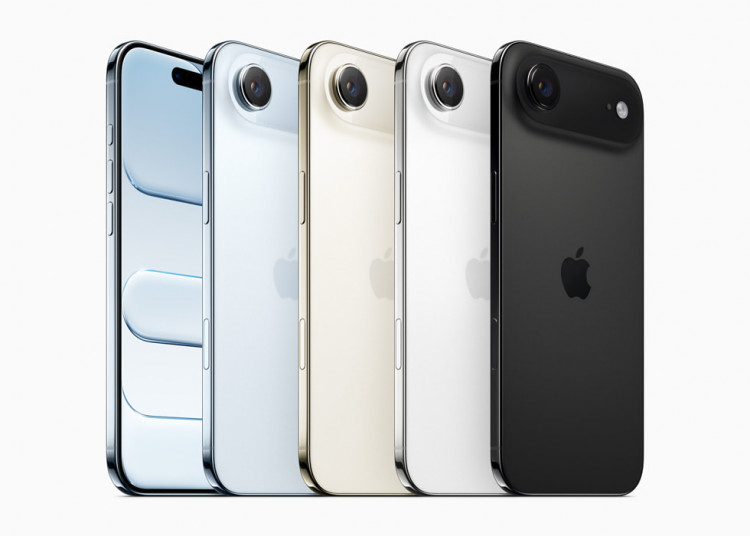
Testing is underway with black and white color variants, according to Bloomberg, consistent with Apple's pattern of narrowing color options during final validation. Industry observers expect Apple to target the premium tier of the foldables market, leveraging its ecosystem to attract buyers who have not yet adopted the form factor despite growth in the segment.
Pricing remains one of the most significant unknowns, but reports suggest the iPhone Fold may debut between $2,000 and $2,500 in the United States, making it Apple's most expensive smartphone to date. Analysts say the price aligns with the device's positioning as both a phone and a tablet replacement, and reflects the higher manufacturing complexity of foldable OLED panels and liquid-metal hinges.