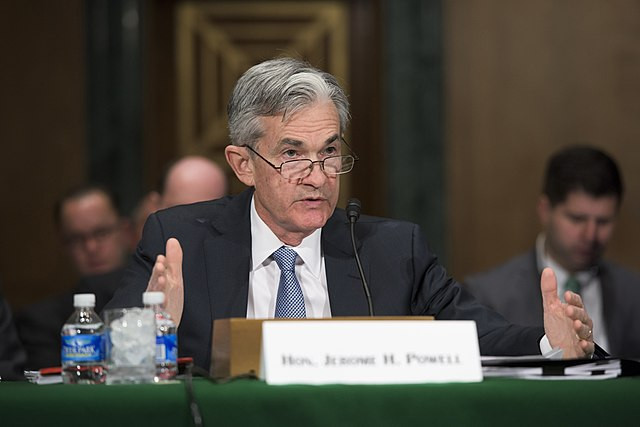
Federal Reserve Chair Jerome Powell said President Donald Trump's sweeping tariff policies have become a primary force pushing U.S. inflation above the central bank's 2% target, complicating efforts to sustain maximum employment and price stability. Speaking at a press conference following the Federal Open Market Committee meeting on Dec. 10, Powell made clear that tariffs are now a central variable shaping monetary policy decisions.
"It's really tariffs that are causing the most of the inflation overshoot," Powell said, according to the official Federal Reserve transcript. His remarks underscored how trade policy has begun to interfere directly with the Fed's dual mandate, creating economic trade-offs not seen in recent decades.
Powell said higher tariffs have driven up the cost of imported goods, a trend that has shown up clearly in recent consumer price data. Goods inflation, he noted, now accounts for a significant share of overall price pressures, limiting the Fed's ability to rely on interest-rate adjustments alone to manage economic conditions.
The Fed chair emphasized that tariffs simultaneously raise prices and restrain growth, leaving policymakers with few clean options. With interest rates as the central bank's primary tool, Powell suggested that tariff-driven inflation reduces flexibility at a time when employment conditions may also be softening.
Regional Fed officials echoed that cautious outlook. Philadelphia Fed President Anna Paulson said inflation pressures tied largely to tariffs could ease over time, while noting that the labor market remains "bending, but not breaking," a phrase that captured the Fed's guarded assessment of employment resilience.
Data from Congress' Joint Economic Committee illustrate the household impact of the tariff regime. According to a JEC report, tariffs imposed since Trump's return to the White House have raised costs for the average U.S. household by nearly $1,500 between February and November 2025. The committee estimated the cumulative cost to consumers during that period at roughly $197 billion.
Key findings from the JEC report include:
- Nearly $1,500 in added costs per household in 2025
- About $197 billion in total consumer price increases
- Higher costs concentrated in imported goods and everyday necessities
Academic research has reinforced concerns about broader economic fallout. One recent working paper projected that escalating trade barriers could contribute to global job losses exceeding 23 million under adverse scenarios, with disproportionate effects on lower-skilled workers and manufacturing-linked sectors.
Major retailers have warned publicly that tariff-related cost increases will continue to be passed through to consumers absent policy changes. Companies dependent on imported intermediate goods have signaled margin pressure and price adjustments across grocery, apparel, and consumer electronics categories.
Financial markets have reacted nervously to Powell's assessment. Previous tariff escalations were followed by equity market volatility, reflecting investor anxiety over slower growth and compressed corporate profits. Analysts say Powell's remarks reinforce expectations of prolonged uncertainty in both inflation and employment trends.
Trump has publicly urged Powell to cut interest rates aggressively, accusing the Fed of politicizing monetary policy. Powell pushed back, reiterating that the Federal Reserve's mandate is set by Congress and that policy decisions must prioritize long-term economic stability over short-term political demands.