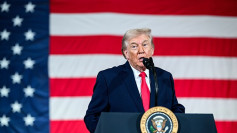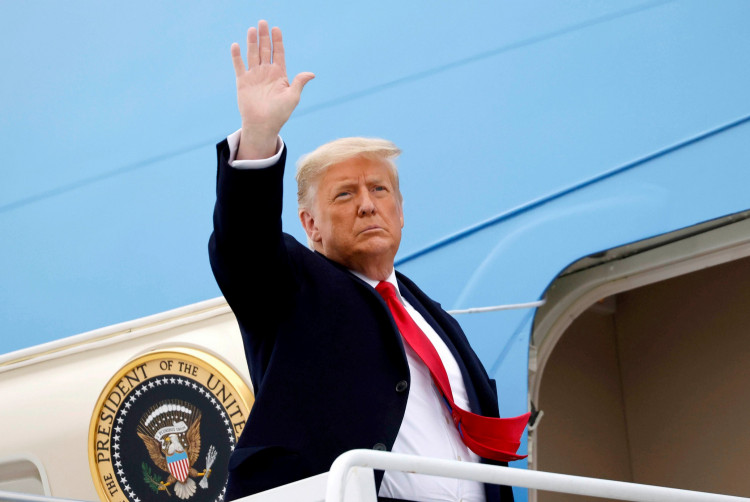
President Donald Trump on Friday nominated former Federal Reserve governor Kevin Warsh to succeed Jerome Powell as chair of the U.S. central bank, a move that caps months of speculation and places a longtime Fed critic at the helm during one of the most politically charged periods in the institution's modern history. The nomination immediately revived debate over Federal Reserve independence as inflation remains above target and the White House intensifies pressure for easier monetary policy.
"I have known Kevin for a long period of time, and have no doubt that he will go down as one of the GREAT Fed Chairmen, maybe the best," Trump wrote in a Truth Social post announcing the decision. In a separate post, he praised the depth of the candidate pool, saying, "Christopher Waller, Rick Rieder, and others, were interviewed for the Fed position. They all would have been outstanding."
Warsh, 55, served on the Federal Reserve Board from 2006 to 2011 after working as an economic adviser in the George W. Bush administration. He later became a frequent Wall Street interlocutor during the financial crisis and is currently a visiting fellow at Stanford University's Hoover Institution. His wife is an heiress to the Estée Lauder fortune.
Market reaction was muted. Stock futures edged lower Friday morning but pared losses after the nomination became clear. Investors have largely viewed Warsh as an institutional figure rather than a political enforcer. "He has the respect and credibility of the financial markets," David Bahnsen, chief investment officer of the Bahnsen Group, said on CNBC's Squawk Box. "There was no person who was going to get this job who wasn't going to be cutting rates in the short term."
Trump's decision follows years of public conflict with Powell, whom the president has repeatedly accused of being slow to cut interest rates. Even after three consecutive rate reductions in late 2025, Trump continued to criticize the Fed, including over cost overruns tied to a major renovation of its Washington headquarters. Powell's term as chair expires in May.
Warsh has been openly critical of the Fed's recent leadership. In a July interview with CNBC, he called for "regime change" at the institution, saying, "The credibility deficit lies with the incumbents that are at the Fed, in my view." In April remarks at the International Monetary Fund, Warsh argued that "our constitutional republic accepts an independent central bank only if it sticks closely to its congressionally-directed duty."
The nomination arrives as the Justice Department is investigating Powell over the Fed building project. Powell has described the probe as a "pretext" designed to pressure the central bank to ease policy. Republican Sen. Thom Tillis of North Carolina said the inquiry would delay confirmation. "My position has not changed: I will oppose the confirmation of any Federal Reserve nominee, including for the position of Chairman, until the DOJ's inquiry into Chairman Powell is fully and transparently resolved," Tillis wrote on X.
Support emerged elsewhere on Capitol Hill. Senate Banking Committee Chairman Tim Scott said Warsh brings "deep knowledge of markets and monetary policy that will be essential in this role," adding that "the Federal Reserve's decisions touch every American household."
The choice of Warsh ends a competitive search overseen by Treasury Secretary Scott Bessent that at one point included 11 candidates. Finalists included Fed Gov. Christopher Waller, BlackRock bond chief Rick Rieder and National Economic Council Director Kevin Hassett.
The policy backdrop remains complex. Inflation is still above the Fed's 2% target, while hiring has slowed. Traders expect at most two additional rate cuts this year, with the benchmark fed-funds rate settling near 3%, the level policymakers view as neutral.